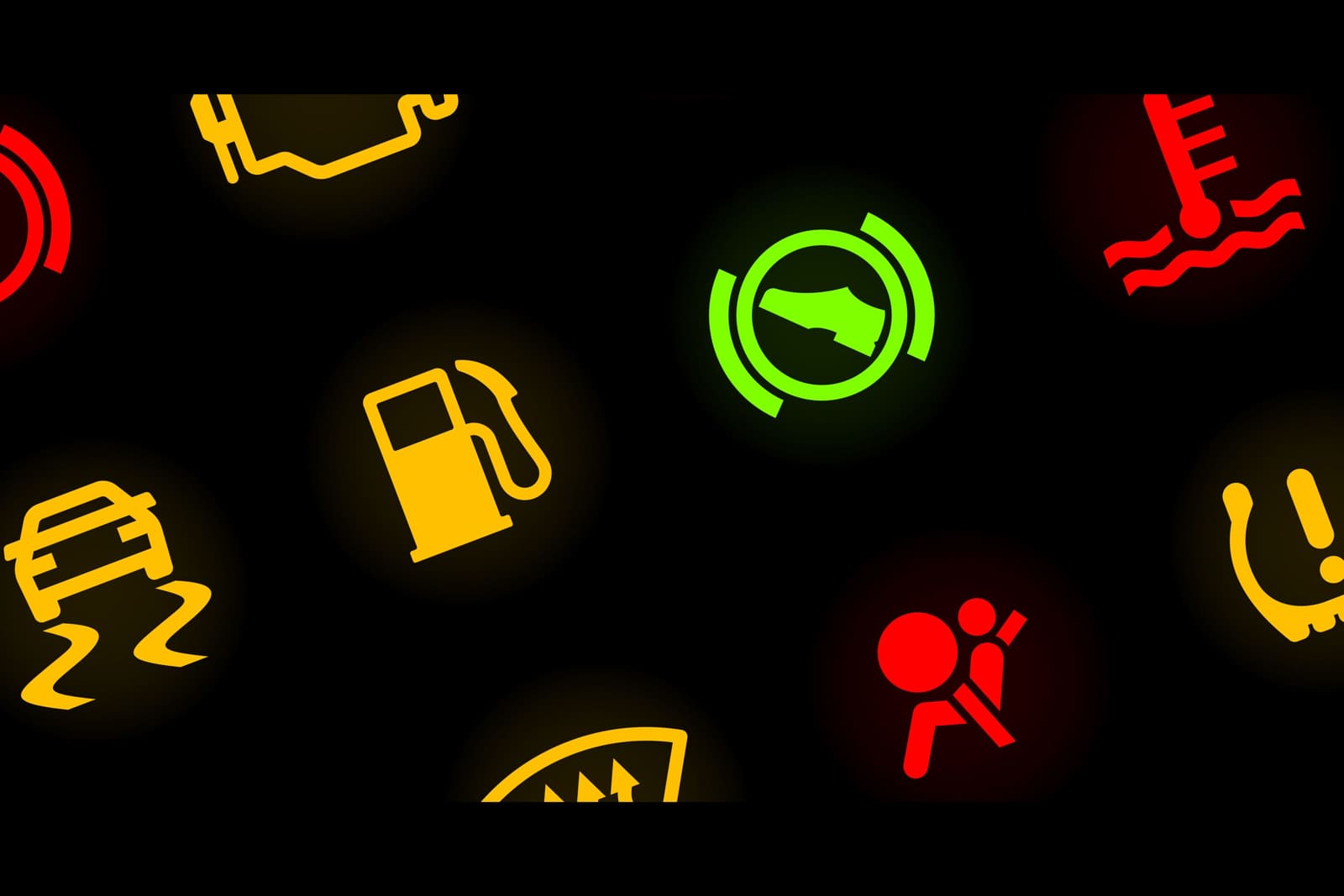
Let’s take a practical look at this topic: why is it important to understand the meaning of dashboard warning lights in your car? Most of them seem fairly straightforward. Some directly indicate a problem, such as “Check ABS” or “Check Engine.” These lights are also accompanied by colors—red, orange, or yellow—that signal the severity of the issue. However, the question arises: what should you do when these lights turn on? Should you stop the car immediately, head to a service center, or can the issue be addressed later? Let’s try to clarify this matter.
Types of Dashboard Icons
The car’s dashboard features lights in various colors, indicating the vehicle’s condition and potential malfunctions. These colors are crucial—they help drivers quickly assess how urgent their response needs to be.
Red Dashboard Warning Lights
Red warning lights are alert signals that require immediate attention. They indicate serious issues that could compromise driving safety or cause damage to the vehicle if not addressed properly. These warnings typically involve:
- low oil pressure
- brake system failure
- engine overheating
- discharged battery
When you see a red warning light, it’s best to stop the car and contact a service center immediately.
Yellow and Orange Dashboard Warning Lights
Yellow and orange warning lights indicate problems that need attention but do not necessarily require immediate action. They usually point to issues related to electronics, assist systems, or low fluid levels. Common examples include:
- low fuel level indicator,
- low windshield washer fluid level indicator,
- check Engine light.
It’s important to identify the issue as soon as possible and take appropriate steps to prevent further complications.
Green and Blue Dashboard Warning Lights
Green and blue warning lights typically provide information about active systems, such as lights or cruise control. These are informational indicators that do not require any action from the driver.
Examples include:
- blue high beam indicator
- green turn signal indicator
These lights are designed to help the driver monitor the current status of the vehicle.
This color-coded organization of dashboard lights makes it easier to quickly assess the situation on the road and respond appropriately to any vehicle issues.
Why Interpreting Car Dashboard Icons by Color Can Be Misleading?
Every guide on understanding dashboard warning lights includes information about their classification by color. Red lights in a car require immediate attention, yellow and orange suggest the issue can be addressed later, while green and blue serve an informational purpose, indicating proper system operation. However, these rules are not always clear-cut, as a few examples show.
First, a red "P" symbol inside a circle indicates the parking brake is engaged. While driving with the parking brake on is not recommended, it does not signify a serious malfunction.
Second, a yellow warning light with an exclamation mark signals a fault in the lighting system. Although you can continue driving, replacing a faulty bulb significantly improves road safety.
Third, a yellow spiral-shaped indicator in diesel vehicles illuminates when the ignition is turned on, signaling that the glow plugs are heating up before starting the engine. It is important to start the engine only after this light turns off. While this is not a critical issue, paying attention ensures the engine operates properly.
Although the color of warning lights is important, it is not the only factor to consider when deciding how to respond. In this article, we will thoroughly discuss which dashboard lights are truly critical and demand immediate action and which ones allow you to continue driving safely to your destination.
The Most Important Dashboard Warnings
A key issue with dashboard warning lights is the lack of complete standardization. Symbols can vary depending on the manufacturer, model, and even the generation of the vehicle. How can you navigate this? The best approach is to familiarize yourself with the owner’s manual. Nevertheless, there are a few critical warning lights whose meanings are worth remembering to ensure safe vehicle operation.
Low Oil Pressure Warning Light

A red oil can-shaped warning light indicates low pressure in the lubrication system. Continuing to drive in this situation is strictly prohibited, as it can cause severe engine damage, potentially requiring a complete overhaul.
The first step is to check the oil level. If the level is too low, top it up and monitor the light. If the warning light remains on, it’s essential to contact a service center. In such cases, it is best to transport the car using a tow truck or, for vehicles with a manual transmission, by towing.
You can read more about this indicator here.
Brake System Failure Warning Light

A red warning light featuring an exclamation mark inside a circle, sometimes accompanied by additional arcs or the words “Brake” or “STOP,” indicates serious malfunctions in the braking system. Continuing to drive under these circumstances is absolutely unacceptable. You should call for a tow truck and have the issue resolved at a service center.
In some vehicles, there is a separate warning light that signals a low brake fluid level. While this is also a serious issue, it can often be resolved relatively easily by topping up the brake fluid, which is available at most automotive stores.
You can read more about this indicator here.
Engine Overheating Warning Light

If you haven’t noticed a rising temperature on the coolant gauge, a red thermometer-shaped warning light will alert you to engine overheating. In this situation, continuing to drive is strictly prohibited. You should stop immediately and wait for the engine to cool down. Once it has cooled, you can check the coolant level and top it up if possible.
However, due to the time required for the engine to cool, calling a tow truck or towing the vehicle may be a more practical solution. In some cases, the car may need to stay at the service center for a longer period to resolve the issue.
You can read more about this indicator here.
Battery Discharge Warning Light
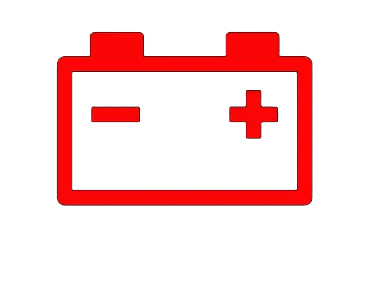
A red battery-shaped warning light on the dashboard indicates that the battery is not charging properly and is losing capacity. Your next steps depend on the situation.
If you’re planning a long trip or short drives with frequent stops, it’s better to cancel them, as a depleted battery may prevent the engine from starting. For daily commutes, such as trips to work and back, the issue may be less disruptive, but visiting an auto electrician for diagnostics as soon as possible is strongly recommended.
You can read more about this indicator here.
Steering System Failure Warning Light

A red steering wheel icon with an exclamation mark signals a potentially dangerous situation. It may indicate problems such as steering lock activation or loss of precision in steering control, posing a safety risk.
In this case, you should either visit a service center immediately or find a safe place to park and address the issue later.
Automatic Transmission Failure Warning Light

A gear-shaped symbol with an exclamation mark indicates problems with the automatic transmission. Given the high cost of repairing this component, continuing to drive is highly discouraged to prevent further damage. In this case, calling a tow truck is a far more economical solution than potentially replacing the transmission.
Severe Vehicle Malfunction Warning Light
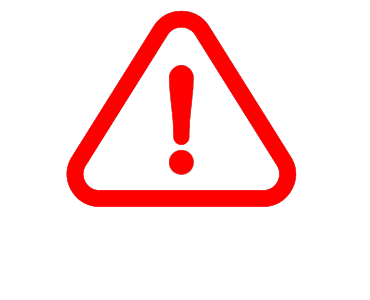
A red triangle with an exclamation mark signals a serious vehicle malfunction. It may appear alongside other warning lights or on its own.
If it lights up together with other warnings, it points to critical issues requiring immediate attention. If it appears alone, it indicates a fault that does not have a dedicated symbol. Additional information about the issue may be displayed on the onboard computer screen.
All the warning lights mentioned above have the potential to interrupt your journey the moment they appear. Ignoring them is not advisable—knowing and understanding the meaning of these symbols can help avoid serious problems in the future.
Errors You Shouldn’t Ignore
ABS Warning Light
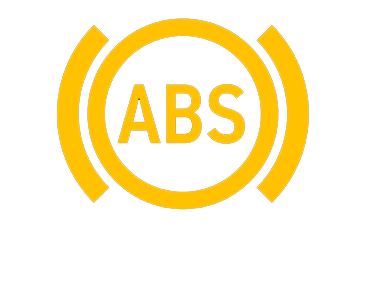
This indicator signals a malfunction in the Anti-lock Braking System (ABS) and is typically yellow. If it lights up while driving, it means the ABS is disabled, increasing the risk of wheel lock-up during sudden braking and the possibility of skidding. However, it is important to note that the primary braking system will still function.
It is recommended to visit a service center as soon as possible for diagnosis and to restore ABS functionality. A similar warning light may indicate issues with the Electronic Stability Program (ESP) and can display relevant symbols to signal similar problems.
Yellow Triangle with an Exclamation Mark

Often referred to as the "yellow exclamation mark in a triangle," this warning light serves as a general alert. In VW group vehicles, such as the Volkswagen Golf, Passat, or Tiguan, it can indicate several non-critical issues that still require the driver’s attention. For example, it may warn of low tire pressure, burnt-out external light bulbs, or low windshield washer fluid level.
In some cases, such as problems with the Start-Stop system, this light may be temporary and disappear after restarting the engine. Volkswagen pairs this universal symbol with additional messages on the display, making it easier to understand the issue and its priority level.
SRS/Airbag Warning Light

The red SRS (Supplemental Restraint System) or Airbag light alerts the driver to a fault in the airbag system. If this light turns on, it means one or more airbags may fail to deploy in the event of a collision.
In such cases, it’s crucial to visit a service center immediately for diagnosis and repairs. If you’re considering purchasing a used car and notice this warning light on the dashboard, it could indicate that the vehicle was involved in an accident, the airbags were deployed, and they were not replaced.
Immobilizer Issue Warning Light
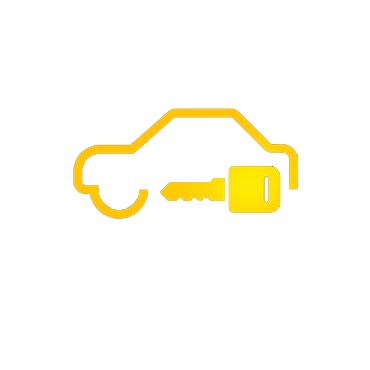
Various red or yellow indicators featuring a key symbol signal a problem with the immobilizer—a system designed to prevent unauthorized engine startup. If this light appears, it may indicate that the car does not recognize the key, which could prevent the engine from starting.
The issue could be caused by problems with the key, the chip, or the immobilizer’s antenna. In some cases, simply replacing the battery in the key fob may resolve the problem. If the warning light remains on, try using the spare key. For persistent issues, a visit to a service center for diagnosis and repairs is recommended.
Lighting System Issue Warning Light
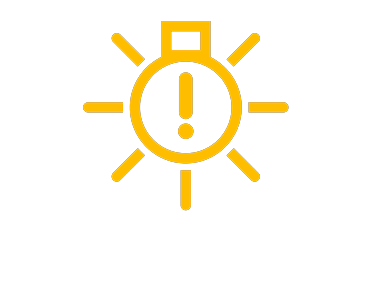
A yellow light bulb symbol with an exclamation mark indicates that one of the external lights (e.g., headlights, brake lights, or turn signals) has stopped working. Such a malfunction reduces the vehicle’s visibility to other road users and compromises safety.
If this warning light appears, replace the faulty bulb as soon as possible to ensure safe driving and avoid potential fines for defective lighting.
Check Engine Warning Light
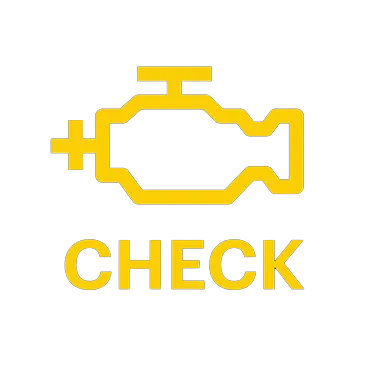
The "Check Engine" light is one of the most recognized warnings among car owners. It can indicate a wide range of issues, from minor malfunctions to serious engine failures. For example, it may signal a problem with one of the sensors. However, without proper diagnostics, it’s difficult to pinpoint the exact cause, leading many drivers to ignore this indicator.
It is strongly recommended to visit a specialist as soon as possible to inspect the system and fix any potential problems, preventing more serious consequences.
You can read more about this indicator here.
Tire Pressure Warning Light

A symbol shaped like a tire outline with an exclamation mark in the center indicates that the pressure in one of the tires has dropped by more than 25% below the recommended level. While the problem may not be visible to the naked eye, reduced tire pressure significantly affects tire wear and increases fuel consumption.
In this situation, stop and inflate the tires using a compressor at a gas station or your own equipment.
Low Fuel Level Warning Light

The low fuel warning light is typically yellow or red and is often accompanied by an audible signal. Depending on the car model, the fuel reserve usually allows for a driving range of 30 to 70 kilometers.
However, it is recommended to refuel at the nearest gas station as soon as possible to avoid the risk of the vehicle coming to a complete stop due to an empty fuel tank.
Low Windshield Washer Fluid Warning Light

This indicator signals a low level of windshield washer fluid. While refilling the fluid is not urgent, it’s advisable to do so at the earliest convenience to avoid problems with cleaning the windshield while driving.
Remember to use the appropriate fluid for the season—summer or winter—to ensure optimal performance.
Open Doors, Hood, or Trunk Warning Lights
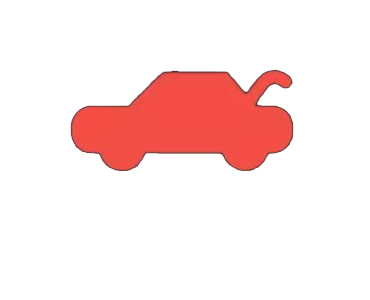
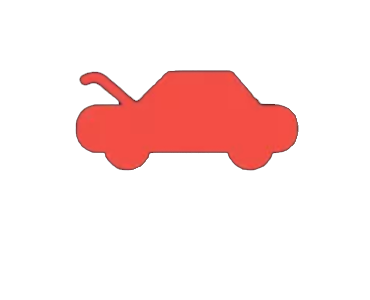
These warning lights are among the most intuitive. If they activate before driving, simply check and close the corresponding door, hood, or trunk.
If the light comes on while driving, pull over to a safe location and make sure all components are properly closed before continuing your journey.
Seatbelt Reminder Warning Light

This indicator reminds drivers and passengers to fasten their seatbelts. In most modern cars, the system can identify exactly which seatbelt is unfastened, including those of passengers.
The warning light is often accompanied by an audible signal, emphasizing the need to fasten seatbelts before starting to drive.
Informative Symbols on the Dashboard
The final category of symbols in a car consists of those that do not serve as warnings but simply provide information about the operation or activation of specific vehicle functions. Let’s briefly review them.

The combustion chamber preheater and glow plugs in diesel engines are operating.
You can read more about this indicator here.

The Electronic Stability Program (ESP) is active.
You can read more about this indicator here.
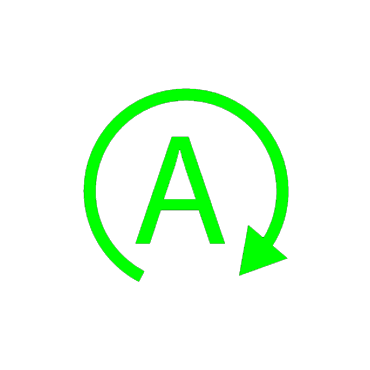
The start-stop system is activated.
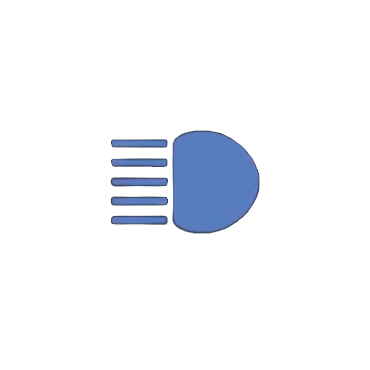
The high beam headlights are on.

The low beam headlights are on.
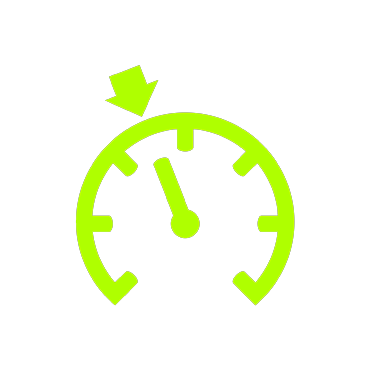
Cruise control is activated.

Low air and road temperatures detected, ice may be present (often accompanied by a warning sound).

Turn signals are on (if the indicator blinks, hazard lights are activated).

The vehicle's position lights are on.

The front fog lights are on.

The rear fog lights are on.

Scheduled maintenance is required (triggered by mileage and manufacturer service recommendations).

The diesel particulate filter is clogged.

The windshield heater is on.

The rear window heater is on.
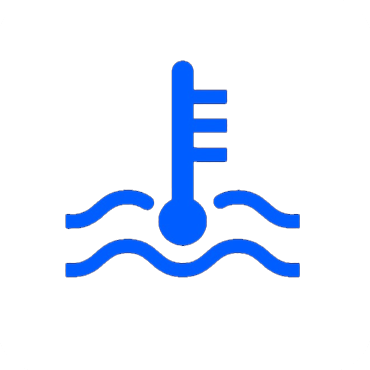
The engine is not warmed up: the engine and coolant have not yet reached operating temperature. Driving is allowed, but high engine speeds and rapid accelerations should be avoided.
As mentioned earlier, dashboard symbols may vary. You may also encounter indicators that are not described in this article. In any case, your main tool for understanding what is happening with your car should be the owner’s manual. May your car run smoothly and provide you with an excellent driving experience!