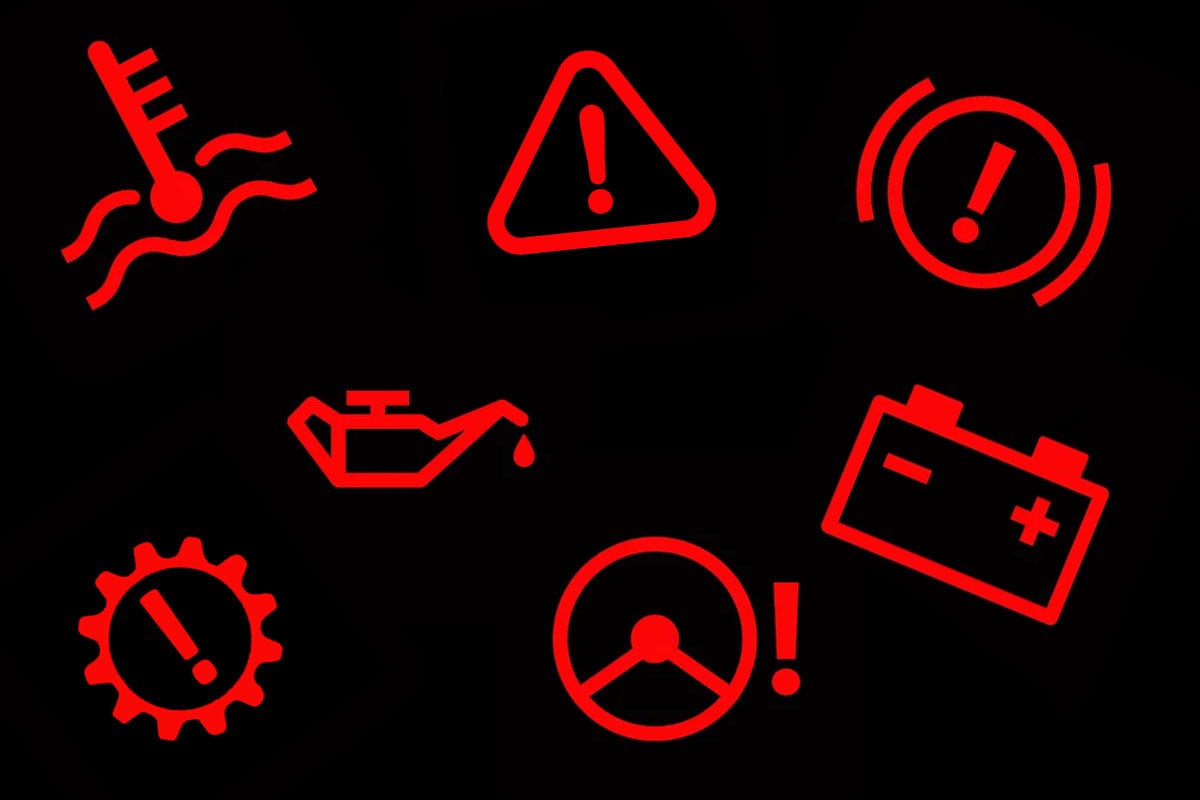
Red warning lights on the dashboard are among the most important signals your vehicle can give you. They indicate serious technical issues that may pose a safety risk or result in costly damage. A red light in the car is a sign that immediate action is required. Ignoring it is not an option.
It’s important to note that the appearance and meaning of red warning lights may vary slightly depending on the make and model of the vehicle. While most symbols are standardized, some manufacturers use unique icons or their own variations. If you're unsure about the meaning of a warning light, consult your vehicle's owner’s manual.
In this article, we’ll cover the most common red warning symbols found on dashboards, explain what they mean, and tell you what steps to take when they appear.
Most Common Red Warning Symbols and What They Mean
Low Oil Pressure Warning

This is one of the most critical alerts on the dashboard. The symbol usually looks like an oil can or a lamp with a drop. When it lights up, it means that oil pressure in the engine lubrication system has dropped — this can be due to low oil level or a more serious mechanical issue.
What to do?
Pull over to a safe location and switch off the engine immediately. Check the oil level — if it’s low, top it up with the correct motor oil. If the warning light remains on after that, do not continue driving. The best option is to call roadside assistance, as driving with low oil pressure can lead to engine seizure and very costly repairs.
You can read more about this indicator here.
Brake System Failure Warning Light

A red circle with an exclamation mark, often accompanied by “Brake” or “STOP,” indicates a problem with the braking system. It may signal a drop in brake fluid pressure or a low brake fluid level.
What to do?
Stop the car immediately. Check the brake fluid reservoir — if the fluid is low, you may top it up, but only if you're certain there are no leaks. In any situation where you’re unsure about the brake performance, it’s best to call for professional help. Driving with faulty brakes is a direct safety risk.
You can read more about this indicator here.
Engine Overheating Warning Light

A red thermometer icon submerged in liquid indicates that the engine temperature has exceeded safe limits. This may be caused by low coolant level, a faulty thermostat, malfunctioning radiator fan, or even a blown head gasket.
What to do?
Stop the vehicle as soon as possible and turn off the engine. Do not open the hood right away — the engine and cooling system may be dangerously hot. Wait 10–15 minutes for the system to cool down, then check the coolant level. If it’s low, refill with the appropriate coolant. If the warning light stays on after restarting the engine, do not continue driving. Call for a tow and have the car professionally inspected. Driving in this condition can cause severe engine damage.
You can read more about this indicator here.
Battery Discharge Warning Light

The symbol resembles a rectangular car battery with plus and minus signs. When this red light appears, it means there is a problem with the charging system — the alternator is not recharging the battery, which can eventually result in a complete discharge.
What to do?
Stay calm, but don’t ignore the issue. You may continue driving, but only for a short distance — ideally to the nearest garage or home — assuming the battery still has enough charge. Avoid long trips and frequent engine shutdowns, as the car might not start again. Visit an auto electrician as soon as possible — a worn alternator belt, faulty brushes, or a failing alternator could be the cause.
You can read more about this indicator here.
Steering System Failure Warning Light

This red warning light, typically shaped like a steering wheel — sometimes with an exclamation mark — signals an issue with the power steering system. It may be caused by a malfunctioning power steering pump, an electronic failure, or even a steering lock or mechanical fault.
What to do?
If this light comes on while driving, you may notice the steering wheel becomes harder to turn — a clear sign of power assist problems. Reduce your speed and carefully drive to a safe place. Contact a mechanic for inspection. Continuing to drive, especially at higher speeds or on winding roads, can be dangerous. Loss of steering control can lead to serious accidents — do not ignore this warning.
Automatic Transmission Failure Warning Light

This symbol typically looks like a gear icon with an exclamation mark inside. When illuminated in red, it can indicate a fault in the automatic transmission — such as a control module error, overheating, low transmission fluid level, or even mechanical failure.
What to do?
If the warning appears, stop the car immediately. Driving with a transmission fault can lead to irreversible damage and extremely expensive repairs. Allow the transmission to cool down if it’s overheated, and check the transmission fluid level — if your vehicle allows for this. However, in most cases, it’s best to call a tow truck and visit a service center. The sooner you act, the more likely you are to avoid costly repairs.
General Vehicle Malfunction Warning Light

This red triangle with an exclamation mark is a general warning indicator. It can appear on its own or in combination with other dashboard lights. Its activation means the car has detected a serious issue that may not be tied to a specific system or that doesn’t have a dedicated warning icon defined by the manufacturer.
What to do?
If you see this warning light, first check whether any additional messages appear on the dashboard display. If so, follow the instructions provided. In all cases, when the red triangle lights up, it’s highly recommended to contact a service center as soon as possible. Driving without identifying the issue could lead to further damage or compromise safety.
Why You Should Never Ignore Red Warning Lights
Red warning lights are triggered only in truly critical situations. Ignoring them may result in severe consequences — from a sudden breakdown to serious damage to the engine, transmission, or braking system. Even worse, some faults may directly threaten your safety and the safety of others on the road.
Many drivers tend to underestimate dashboard signals, thinking: “The car still drives, so it’s fine.” That’s a serious mistake. Modern vehicles are equipped with advanced diagnostic systems that alert you in time when something goes wrong. A red warning light isn’t a suggestion — it’s a clear warning. Ignoring it could leave you stranded… and facing a hefty repair bill.
Conclusion
Red warning lights on the dashboard are not to be ignored under any circumstances. They are like a red traffic light — meant to stop you before a serious malfunction occurs. Each light signals a critical issue that can affect your safety, the health of your vehicle, and your wallet.
Many drivers hope the issue will “go away on its own” and keep driving. Unfortunately, when it comes to red warning lights, that’s the quickest route to expensive repairs.
If you want to avoid serious consequences — act immediately. Knowing what each warning light means and responding quickly will help you stay safe and potentially fix the issue before it becomes a real problem.
Frequently Asked Questions
What do red indicators on the dashboard mean?
Red warning lights indicate a serious malfunction or a critical condition of the vehicle’s systems that requires immediate attention — such as the brake system, cooling system, battery, or oil pressure.
Should you stop immediately if a red warning light turns on?
Yes — a red indicator usually signals a potentially dangerous situation. It’s best to stop safely and identify the cause to avoid damage or accidents.
What should you do if the red brake system warning light appears?
First, check whether the handbrake is engaged. If it is released and the light stays on, immediately check the brake fluid level and the condition of the brake system.
What does the red engine temperature warning light mean?
It signals severe engine overheating. Stop the vehicle, turn off the engine, allow it to cool down, and check the level and condition of the coolant.
Can you continue driving with a red warning light on?
It’s strongly discouraged — doing so may lead to serious engine, brake system, or other component damage. Identify and fix the issue as soon as possible or contact a service center.