

Perpendicular Parking — A Guide for Drivers
Table of Contents
It’s Monday morning, and you’re rushing to work. The office parking lot has only one spot left. Stress levels rise, your hands get sweaty on the wheel, and you wonder if you can park quickly and safely. Sound familiar?
Statistics indicate that approximately 20% of all minor parking lot collisions occur during parking maneuvers. Often, the cause isn’t a lack of skill but rather haste and lack of knowledge about the correct techniques. This guide will help you master perpendicular parking with confidence and safety. You'll learn tried-and-tested techniques from experienced drivers and discover common mistakes to avoid.
What is Perpendicular Parking?
Perpendicular parking is a basic maneuver that involves positioning your car at a 90-degree angle to the curb or designated lines. It is the most common parking method in large lots, shopping centers, and office buildings.
This type of parking requires not only good maneuvering skills but also an accurate assessment of space. A perpendicular parking spot should ideally be at least 2.3 meters wide and 4.5–5 meters long.
You can execute this maneuver in two ways: parking front-first or reversing into the spot. Each method has its own advantages and challenges, which we’ll explore in detail later.
Regardless of the chosen method, remember that perpendicular parking requires special attention to the following:
- Observing your surroundings using side mirrors.
- Maintaining the correct distance from the curb.
- Timing your turns precisely.
- Controlling your speed during the maneuver.
Reverse Perpendicular Parking
This is the safest and most recommended parking method. While many drivers prefer front-first parking due to its apparent simplicity, reversing into a spot offers several key advantages: better visibility when exiting, greater maneuvering accuracy, and—most importantly—a higher level of safety.
Step-by-Step Instructions
- Preparation:
- Align your car parallel to the row of parked vehicles.
- Maintain a distance of about 1.5–2 meters.
- Signal with your right turn indicator.
- Ensure the maneuver is safe for other road users.
- When to Turn:
- Start turning when your rear wheels align with the edge of the selected spot.
- Turn the wheel fully toward the parking space.
- Monitor your car’s position through the side mirrors.
- Executing the Maneuver:
- Reverse slowly while keeping an eye on your surroundings.
- Once your car is at a 45-degree angle, gradually straighten the wheel.
- Maintain equal gaps from neighboring vehicles.
- Straighten the wheels during the final phase of the maneuver.
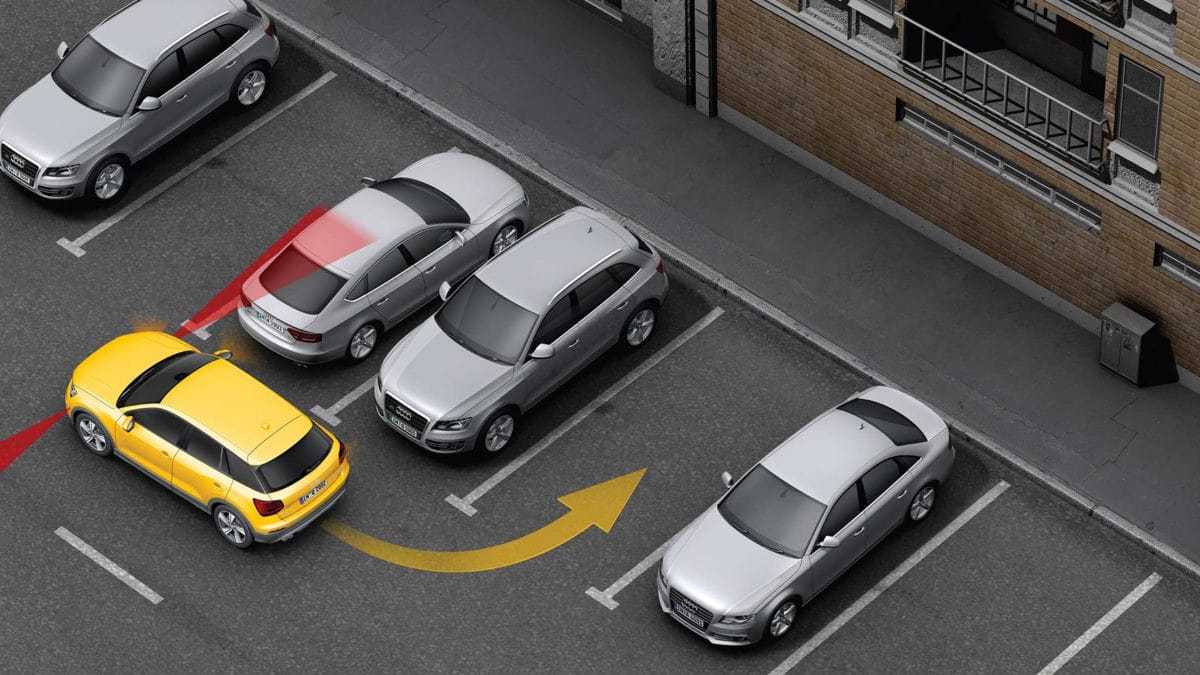
Parking scheme
Parking video
Common Mistakes in Reverse Perpendicular Parking
- Starting with too little distance from the row of parked cars.
- Turning at the wrong moment.
- Straightening the wheel either too quickly or too slowly.
- Inadequate observation of surroundings through the side mirrors.
- Excessive speed during the maneuver.
It’s important to remember that reverse perpendicular parking requires practice. Beginner drivers often feel intimidated by this maneuver, but over time, it becomes intuitive and natural.
Front-First Perpendicular Parking
Although front-first parking may seem like the simplest option, it requires special attention and precision. Do you want to know how to park front-first in a perpendicular spot? Follow the detailed instructions and tips below to perform this maneuver safely and confidently.
Step-by-Step Parking Technique
- Preparation for the Maneuver:
- Find a suitable parking spot.
- Maintain a safe distance from the row of parked vehicles.
- Turn on the appropriate turn signal.
- Reduce your speed to a safe level.
- Front-First Perpendicular Parking: When to Turn:
- start the maneuver when the front axle of your car's wheels aligns with the edge of the neighboring car.
- Steer decisively toward the parking space.
- Control the entry angle — it should be around 90 degrees.
- Final Phase of Parking:
- Enter slowly, keeping an eye on the distance to neighboring vehicles.
- Maintain equal gaps on both sides.
- Park the car at a safe distance from the curb.
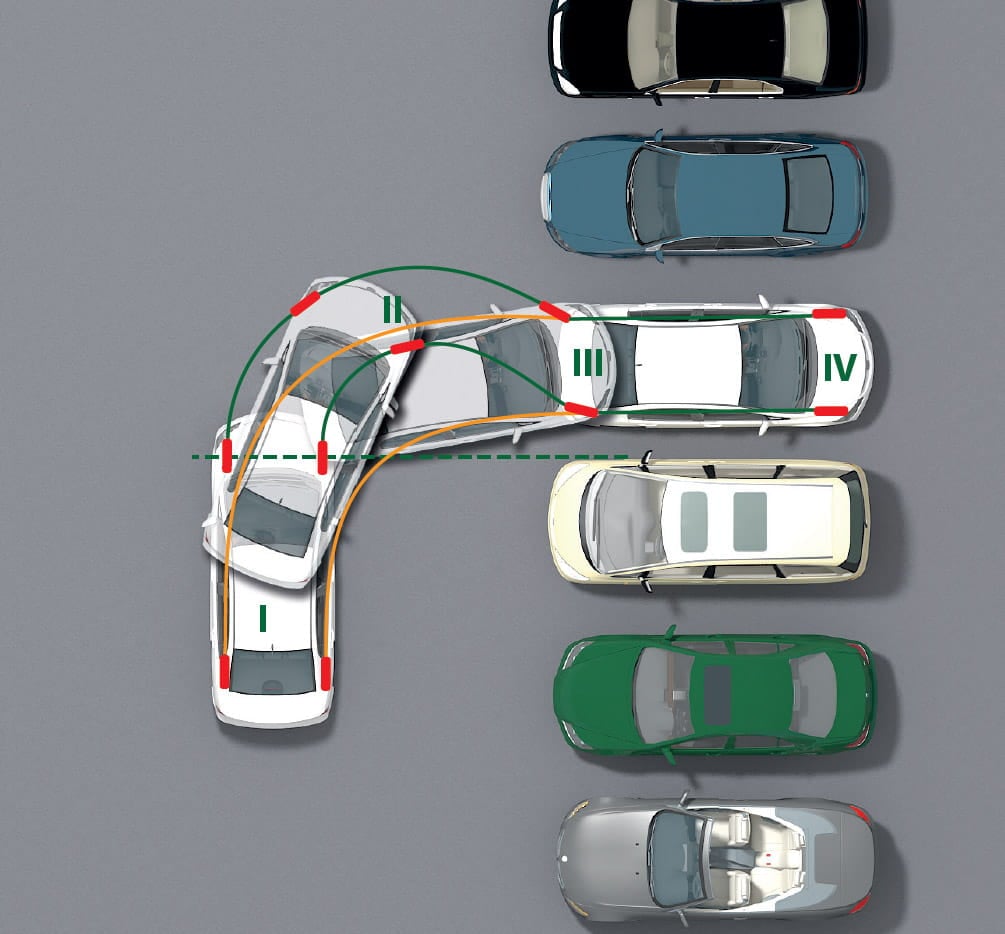
Parking scheme
Key Safety Aspects
- Always ensure there is enough space to complete the maneuver.
- Pay close attention to pedestrians who may suddenly appear between cars.
- Remember that exiting the spot will involve limited visibility.
- If in doubt, adjust the car’s position rather than leaving it improperly parked.
Main Challenges of Front-First Parking
- Accurately assessing the width of the parking spot.
- Maintaining the correct turning angle.
- Controlling the distance to neighboring vehicles.
- Limited visibility when exiting the parking space.
Although front-first perpendicular parking may seem easier than reversing into a spot, it requires extra caution when exiting the space. For this reason, many experts recommend practicing both techniques to prepare for different parking scenarios.
Perpendicular Parking – What Else Should You Keep in Mind?
Modern vehicles are often equipped with advanced parking assistance systems such as sensors, rearview cameras, or side mirrors with tilt-down functionality. However, even the most sophisticated systems cannot replace a driver’s attentiveness and good judgment.
Parking in challenging conditions requires extra caution—be it poor visibility, wet surfaces, or maneuvering in tight spaces. The parking surface should not be excessively sloped, and the painted lines should be clearly visible.
Another important aspect of perpendicular parking is parking etiquette. If you accidentally damage another vehicle, leave your contact information—it’s a sign of responsibility and respect for other drivers.
Conclusion
Perpendicular parking is a skill that any driver can master with regular practice. By following the rules outlined in this guide, you’ll not only make parking easier in your daily life but also enhance safety in parking lots. Remember, practice makes perfect, and confidence in parking comes with experience.
Frequently Asked Questions
What is perpendicular parking?
Perpendicular parking is a method of positioning a vehicle at an angle of approximately 90° to the roadway or parking lines. This type of parking is widely used in shopping center parking lots, office areas, and large car parks, as it allows efficient use of available space.
How do you properly perform perpendicular parking in reverse?
To park safely in reverse, first position the vehicle parallel to the row of parked cars, leaving a distance of about 1.5–2 meters. Then activate the turn signal and begin reversing, turning the steering wheel when the rear wheels reach the edge of the selected parking space. After that, slowly straighten the wheels and monitor the distance to neighboring vehicles using the mirrors.
What mistakes do drivers most often make during perpendicular parking?
Common mistakes include starting too close to adjacent vehicles, turning the steering wheel at the wrong moment, straightening the wheels too late, insufficient observation of surroundings through the mirrors, and performing the maneuver at excessive speed.