

Start-Stop System: What It Is, How It Works and Whether You Should Disable It

Table of Contents
- What Is the Start-Stop System?
- How the Start-Stop System Works
- Components of the Start-Stop System
- Advantages of the Start-Stop System
- Disadvantages of the Start-Stop System
- Does the Start-Stop System Harm the Engine?
- When the Start-Stop System Is Most Useful
- When It's Better to Disable the Start-Stop System
- How to Disable the Start-Stop System
- Should You Disable the Start-Stop System?
In theory, it is designed to reduce fuel consumption and lower emissions, but in practice it often often starts to irritate drivers even at the very first stop at a traffic light. The engine shuts off, then restarts a moment later — which raises a fair question: does it really make sense, or is it just another “eco feature”? To understand this, it is important to know how the Start-Stop system works and when it actually delivers noticeable benefits.
What Is the Start-Stop System?
The Start-Stop system is a function that automatically shuts the engine off when the vehicle comes to a stop and restarts it when driving resumes. Its main purpose is to reduce fuel consumption and limit exhaust emissions, especially in urban driving conditions.
Today, this solution is widely used in most modern vehicles — both with manual and automatic transmissions. So, if you’re wondering what the Start-Stop system is, the simplest explanation is: it’s a technology that saves fuel by switching the engine off during idling.
How the Start-Stop System Works
The operating principle is straightforward and based on a repeating sequence:
- You bring the vehicle to a stop → the engine switches off automatically;
- You press the clutch (in a manual transmission) or release the brake pedal (in an automatic transmission) → the engine restarts.
In practice, the system works almost imperceptibly, although in earlier versions a slight delay may be noticeable when pulling away. In simple terms, this is how the Start-Stop system works. “how does the Start-Stop system work” — without unnecessary theory.
What the System's Operation Depends On
The Start-Stop system does not operate in all situations. Its activation depends on several key factors:
- Battery charge level: if the battery is insufficiently charged, the system will not switch off the engine to avoid restart issues;
- Engine temperature: the engine must reach its optimal operating temperature, otherwise the system remains inactive;
- Climate control demand: if maintaining cabin comfort requires active air conditioning or heating, the engine will continue running to ensure proper performance;
- Driving conditions: for example, during manoeuvring, uphill driving, or situations requiring an immediate response, the system may not activate.
If at least one of these conditions is not met, the system simply will not switch off the engine — and this is completely normal.
Components of the Start-Stop System
The Start-Stop system is not a single component, but a set of elements working together:
- Reinforced starter motor — designed for a significantly higher number of engine start cycles compared to standard systems; it operates faster and offers improved durability;
- AGM or EFB battery — engineered for frequent charge and discharge cycles, providing stable power supply even during repeated engine starts;
- Monitoring sensors — collect data on battery condition, engine temperature, climate control operation and driving conditions, and send it to the control unit;
- Control module — analyses all incoming data and determines whether the engine can be safely switched off without affecting comfort or safety.
Simply put: all these components are designed to withstand a much higher number of engine start cycles compared to a conventional system.
Since the Start-Stop system increases the load on the starter and the battery, it is important to monitor their condition. If necessary, you can choose suitable parts in our catalog.
Advantages of the Start-Stop System
The main benefit of the system is reduced fuel consumption and lower exhaust emissions, although in practice the effect depends on driving style. Key advantages include:
- Lower fuel consumption: typically by 3–10%, and in heavy traffic conditions up to around 15%. The greatest savings occur during longer stops, when the engine would otherwise be idling;
- Reduced exhaust emissions, especially in urban driving: switching the engine off at a standstill genuinely lowers CO₂ output and other harmful pollutants;
- Improved comfort at stops: with the engine off at traffic lights, the cabin becomes quieter — particularly noticeable in dense city traffic;
- Better efficiency in city driving: the system eliminates unnecessary engine operation, making the vehicle more economical during frequent stops.
In short: the more often you are stuck in traffic, the more benefit you will gain.
Disadvantages of the Start-Stop System
However, it is not a perfect solution, and this is where the real nuances appear. The most common drawbacks include:
- Increased load on the starter motor and battery: frequent start cycles accelerate wear of these components, even though they are specifically reinforced;
- Higher cost of batteries: AGM or EFB batteries are used instead of conventional ones, making replacement significantly more expensive, while fitting a standard battery is usually not possible;
- Frequent engine restarts: in dense urban traffic, the engine may restart dozens of times during a single trip;
- Potential discomfort: vibrations and slight delays during restart — especially noticeable in older systems or when the engine is not operating perfectly;
- Limited effectiveness on highways: at constant speeds, the system rarely activates, so the benefits are minimal.
For many drivers, reduced driving comfort is the main reason for disabling the system.
Does the Start-Stop System Harm the Engine?
This is one of the most common questions, and to a large extent, this is a myth.
The engine does not wear out as much as many drivers assume. Modern power units and their components are designed from the outset to operate with a Start-Stop system. The main load is placed on the starter motor and the battery, not on the engine itself.
In practice: if all components are in good condition, the system does not have a significant impact on engine lifespan.
Does the Start-Stop System Actually Reduce Fuel Consumption?
Fuel savings depend directly on driving style. The system delivers noticeable benefits mainly when stops last at least several seconds or more.
During very short stops (for example, in slow-moving “stop-and-go” traffic), the benefit is minimal, while frequent restarts may be more noticeable than the fuel savings themselves. Therefore, the effectiveness of the system should always be evaluated based on real driving conditions, not only on manufacturer claims.
When the Start-Stop System Is Most Useful
The system makes the most sense where the vehicle stops frequently. It performs best in urban driving — in heavy traffic, at traffic lights, and during frequent stops at intersections.
In such conditions, you can clearly notice reduced fuel consumption and less engine idling time, which would otherwise lead to unnecessary fuel consumption.
When It's Better to Disable the Start-Stop System
There are situations where the system becomes more of a nuisance than a benefit. It is advisable to switch it off in the following cases:
- in heavy stop-and-go traffic;
- when the battery is weak;
- during intensive use of the air conditioning system;
- while manoeuvring (for example, when parking).
In such conditions, the system may operate inconsistently or reduce driving comfort.
How to Disable the Start-Stop System
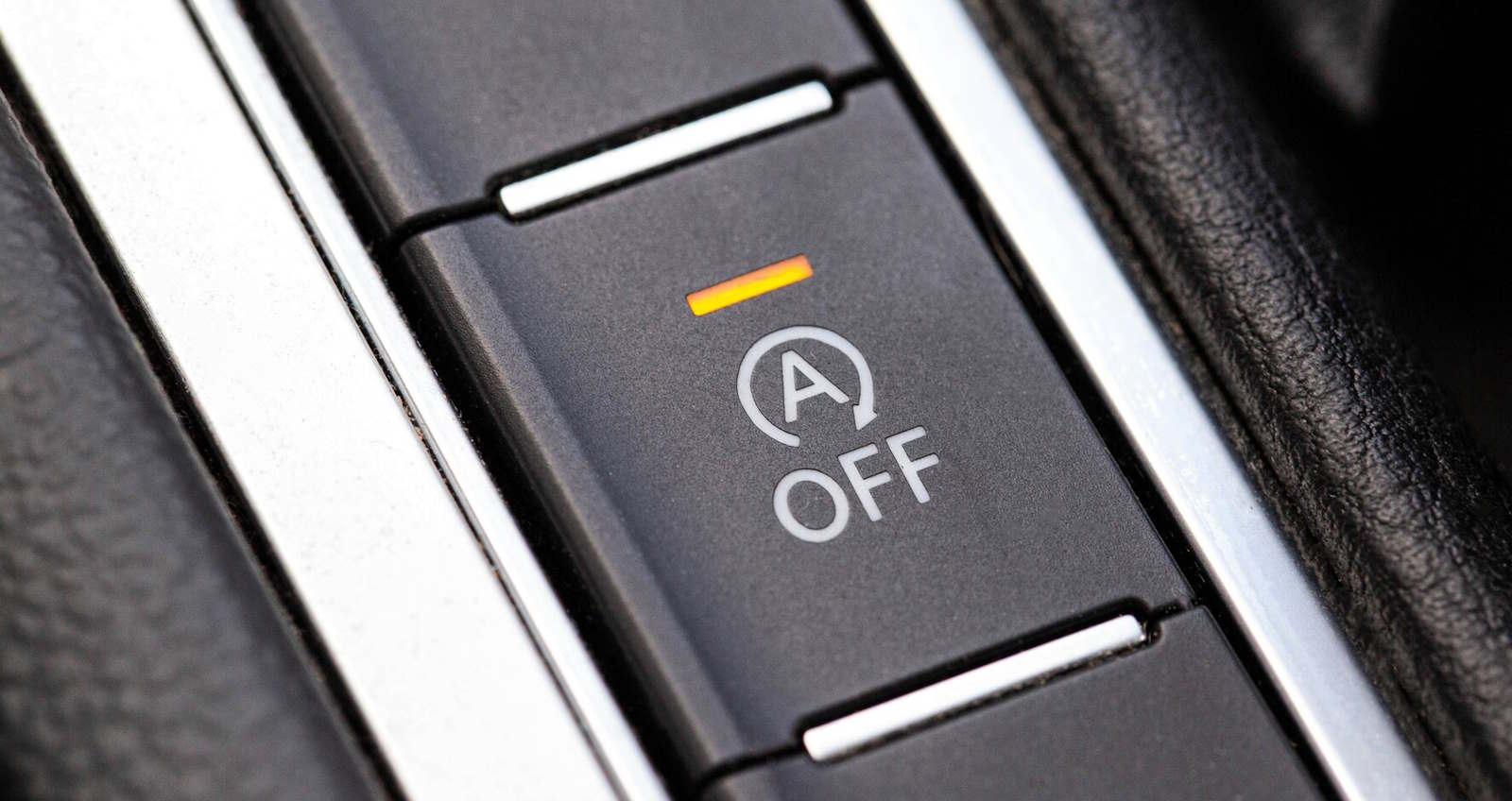
Disabling the system is simple — in most vehicles, there is a dedicated button inside the cabin. It is usually marked with an “A” symbol inside a circle, which represents the Start-Stop system indicator.
It is important to keep in mind:
- the deactivation works only until the engine is switched off;
- after restarting the engine, the system activates automatically again;
- permanent deactivation is only possible through software modification.
Should You Disable the Start-Stop System?
There is no universal answer — it all depends on your driving style and how the vehicle is used.
If you mainly drive in the city, spend a lot of time in traffic, and want to reduce fuel consumption, the Start-Stop system makes sense and can provide real benefits.
On the other hand, if you mostly drive on highways, prefer smooth and uninterrupted driving, find the system irritating, or have concerns about the condition of the battery, disabling it is fully justified.
In practice, it is just a tool: effective in the right conditions, but not something that must be used all the time.
Frequently Asked Questions About the Start-Stop System
What is the Start-Stop system?
It is a technology that automatically switches the engine off when the vehicle is stationary and restarts it when you set off again. Its main purpose is to reduce fuel consumption and exhaust emissions, especially in city driving.
How does the Start-Stop system work?
When the vehicle comes to a stop, the engine shuts down automatically. It restarts when you press the clutch or release the brake pedal. The process is automatic and depends on operating conditions.
Can the Start-Stop system be turned off?
Yes, most vehicles have a button to deactivate it. However, after restarting the engine, the system usually switches back on automatically.
Does Start-Stop damage the engine?
No. Modern engines are designed to work with this system. The main load is on the starter motor and battery, not on the engine itself.
When is the Start-Stop system most useful?
In city driving — in traffic jams, at traffic lights, and during frequent stops. These are the conditions where real fuel savings can be noticed.
When should you turn off the Start-Stop system?
In slow-moving traffic, with a weak battery, during heavy use of air conditioning, or when manoeuvring. In such situations, the system may reduce driving comfort.
How much fuel does the Start-Stop system save?
Typically around 3–10%, and up to about 15% in heavy urban traffic. On the motorway, the effect is minimal.
Why does the system sometimes not work?
It may not activate due to low battery charge, a cold engine, active climate control, or demanding driving conditions — this is normal system behaviour.