

Faulty Lambda Sensor — Symptoms in a Petrol Engine
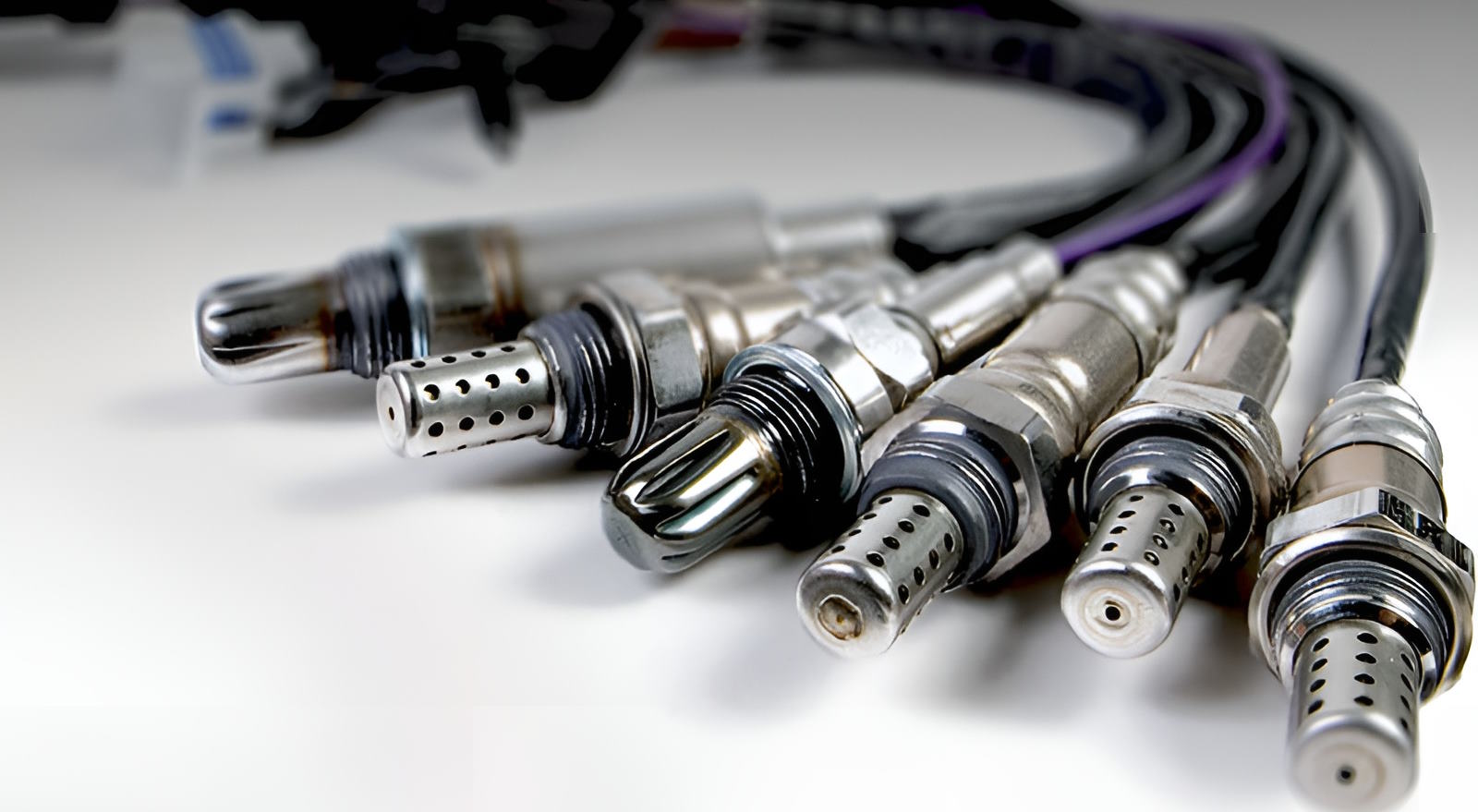
Table of Contents
The lambda sensor is a small component that many drivers only become aware of when it stops working properly. One of the first signs of a malfunction is usually a noticeable increase in fuel consumption — often by several dozen percent. In appearance, the sensor is similar to a spark plug, but with an attached wiring connector.
In a petrol vehicle, it plays a key role — without it, the engine cannot effectively control the air-fuel mixture.
What Is a Lambda Sensor?
The lambda sensor, also known as an oxygen sensor, is installed in the vehicle’s exhaust system. Its main task is to measure the amount of residual oxygen in the exhaust gases, which allows the engine control unit to assess how efficiently the air-fuel mixture is being burned in a petrol engine.
To understand its role, it is important to consider the conditions in which it operates. Inside the catalytic converter, chemical reactions take place that reduce the levels of hydrocarbons, nitrogen oxides and carbon monoxide in the exhaust gases. The efficiency of these processes directly depends on the composition of the exhaust, which is precisely what the lambda sensor monitors.
In petrol vehicles without this sensor, exhaust gas purification efficiency is only around 60%. A properly functioning lambda sensor allows this efficiency to reach up to 95% — a significant difference both for the environment and for fuel costs.
How Does a Lambda Sensor Work?
The air-fuel mixture in the cylinders of a petrol engine is controlled by the engine control unit (ECU) based on data from multiple sensors, including:
- coolant temperature;
- vehicle speed;
- engine speed (RPM);
- air flow;
- and, of course, the lambda sensor.
The sensor itself is installed in the exhaust system — directly after the exhaust manifold and before the catalytic converter. Inside the lambda sensor there is a ceramic element made of zirconium dioxide with platinum electrodes. One side of the sensing element is exposed to exhaust gases, while the other is exposed to atmospheric oxygen entering through ventilation openings.
The difference in oxygen concentration triggers an electrochemical reaction, which generates a voltage signal. The higher the oxygen content in the exhaust gases, the lower the voltage — and vice versa.
The engine control unit interprets this signal and adjusts the fuel injection in real time:
- low voltage (around 0.1 V) indicates excess oxygen — a lean mixture — the ECU increases fuel delivery;
- high voltage (around 0.9 V) indicates a lack of oxygen — a rich mixture — the ECU reduces fuel delivery.
This continuous adjustment process allows the system to maintain the optimal air-fuel ratio of the optimal stoichiometric air-fuel ratio of 14.7:1. As a result, exhaust emissions are reduced and fuel efficiency improves.
The lambda sensor begins to operate effectively after reaching a temperature of approximately 300–350°C. Many modern sensors are equipped with a built-in heating element, which helps them reach operating temperature more quickly.
Possible Lambda Sensor Failures
Operating under high temperatures and in a chemically aggressive environment, the lambda sensor gradually wears out. Its service life is limited, and over time various faults may occur. The most common ones include:
- internal short circuit — typically caused by natural wear;
- external short circuit — often related to damaged wiring;
- no signal (no voltage) — commonly due to melted wires or connectors;
- loss of ground connection — usually the result of corroded contacts;
- overheating — for example, caused by incorrect ignition timing or worn valves;
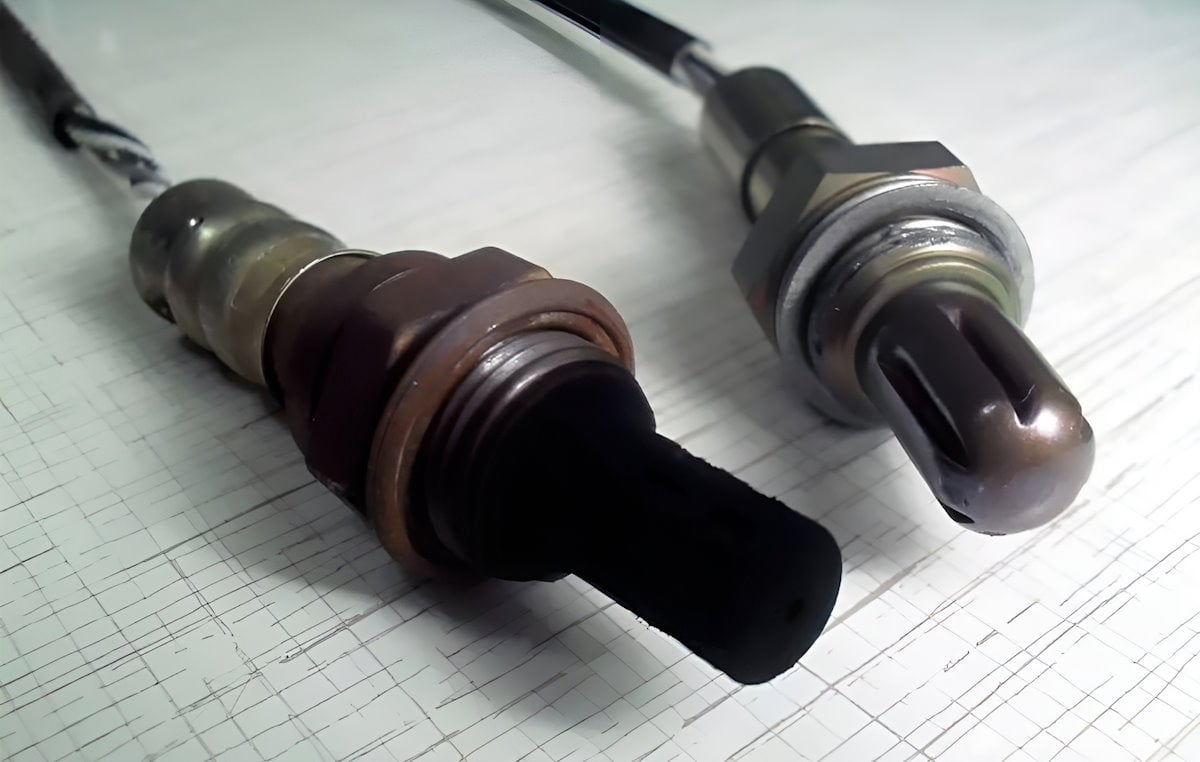
- black carbon deposits on the sensor — indicate oil entering the exhaust system (worn piston rings or valve stem seals) or prolonged operation of the petrol engine with an overly rich mixture;
- green deposits — point to coolant entering the exhaust system, for example due to a damaged cylinder head gasket;
- mechanical damage — affecting either the sensor itself or its wiring;
- oxidised connectors — which reduce signal quality.
Even a single fault listed above can disrupt the operation of the entire engine management system.
Lambda Sensor — Symptoms of Failure in a Petrol Engine
Although the declared service life of a lambda sensor can reach up to 150,000 km, in practice it largely depends on operating conditions, engine condition and fuel quality. When the sensor fails, a petrol vehicle usually shows clear warning signs — it is important to recognise them in time.
Typical symptoms of a faulty lambda sensor in a petrol car include:
- a sharp increase in fuel consumption — in some cases, fuel usage may rise by up to 30%. This is one of the most common signs of lambda sensor failure, especially in petrol engines;
- unstable engine speed — particularly noticeable at idle; the engine may misfire, run unevenly or stall;
- thick black smoke from the exhaust — caused by burning an excessively rich mixture;
- increased levels of carbon monoxide (CO) and hydrocarbons (HC) in the exhaust — harmful both to the environment and to the catalytic converter;
- loss of engine power — the vehicle accelerates more slowly, and throttle response becomes sluggish;
- Check Engine warning light — appears on the dashboard when an incorrect signal from the lambda sensor is detected.
If several of these symptoms occur at the same time, it is highly likely that the lambda sensor is faulty. Delaying diagnostics is not recommended — driving with a defective sensor leads to accelerated wear of the catalytic converter and higher repair costs in the long run.
Diagnostics and Testing
To assess the condition of a lambda sensor, mechanics use several methods. The first step is always a visual inspection — checking the sensor, connector and wiring for any signs of mechanical damage. If everything appears intact, the next step is to test the insulation of the wires leading to the engine control unit.
More accurate information can be obtained through computer diagnostics. This allows specialists to:
- check the operation of the lambda sensor’s heating element;
- evaluate the output signal level;
- detect unstable sensor performance under different operating conditions of the petrol engine.
On average, such diagnostics is recommended every 30,000 km. This helps monitor the condition of the lambda sensor and also allows early detection of other potential issues — for example, faults in the ignition or fuel system.
Choosing a Lambda Sensor at 2407.PL
If you are looking for a new lambda sensor for your petrol vehicle, you can easily find a suitable option in our catalogue.
Go to the lambda sensor catalogueYou can also use a convenient parts selection system:
- by VIN code;
- by vehicle make, model and engine version;
- by part number — simply enter it into the search bar.
If you have any difficulties with the selection, our specialists are always ready to assist and help you choose the right sensor specifically for your vehicle.
Frequently Asked Questions
What are the symptoms of a faulty lambda sensor in a petrol car?
The most common symptoms include increased fuel consumption (up to 30%), unstable engine operation at idle, jerking, loss of power, black smoke from the exhaust and the Check Engine warning light appearing.
Why is it important to replace a faulty lambda sensor in time?
The lambda sensor is responsible for monitoring the air-fuel mixture and emission levels. When it fails, the mixture may become too rich or too lean, which negatively affects petrol engine performance, increases fuel consumption and accelerates wear of the catalytic converter.
Can you drive with a faulty oxygen sensor?
Technically yes, but it is not recommended. Vehicle performance and fuel efficiency decrease, engine operation may become unstable, and emission levels increase — it is best to fix the issue as soon as possible.
How can you check if the problem is related to the lambda sensor?
In most cases, computer diagnostics is performed — including emission measurement, sensor signal analysis and reading fault codes from the engine control unit. It is also important to pay attention to typical symptoms such as unstable engine speed, catalytic converter overheating and increased exhaust emissions in a petrol vehicle.