

EGR Valve Stuck Open: How to Recognize It and What to Do
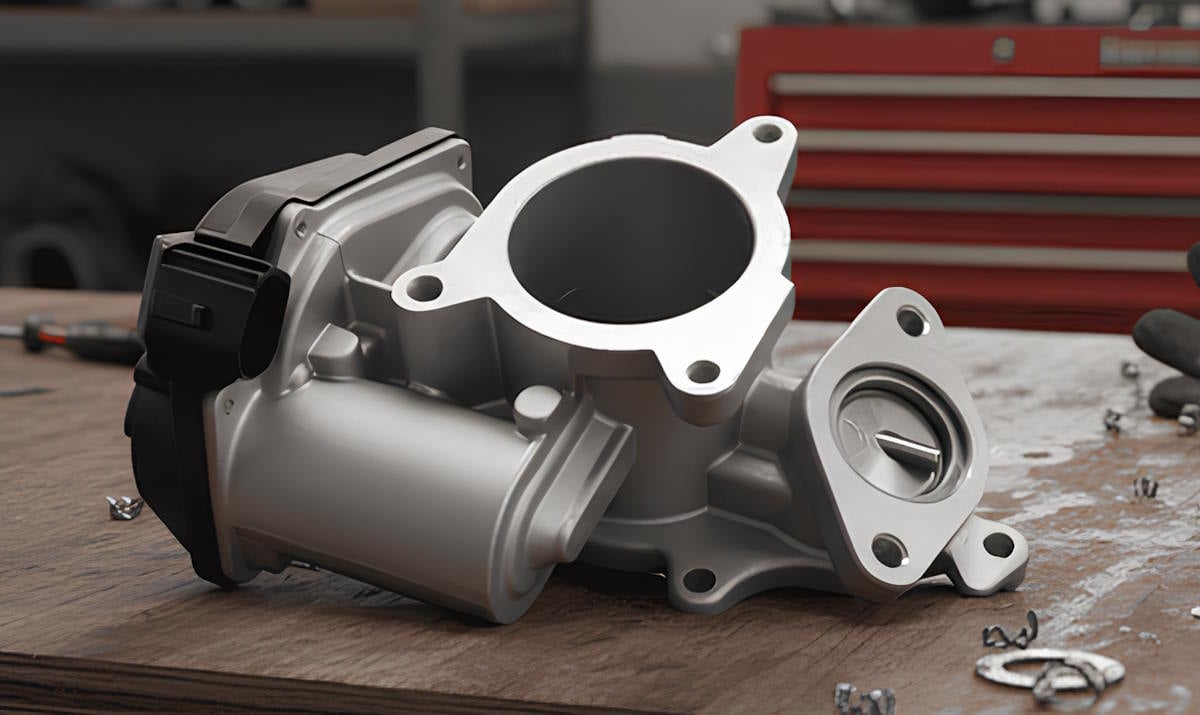
Table of Contents
- What the Fault “EGR Stuck Open” Means
- Typical Symptoms of an EGR Valve Stuck Open
- Why the EGR Valve Gets Stuck in the Open Position
- What Are the Risks of Driving with the EGR Valve Stuck Open in the Long Term
- Diagnosis: How to Confirm That the EGR Valve Is Stuck Open
- What to Do If the EGR Valve Is Stuck Open
- Summary
Is the engine running rough at idle, the car jerking when starting off, and the Check Engine light constantly illuminated? This is a typical scenario when the EGR valve is stuck open and begins to destabilize engine operation. The problem does not always develop suddenly, but its consequences can become costly over time. Find out how to quickly recognize the fault and what to do before a small component triggers a chain of failures.
What the Fault “EGR Stuck Open” Means
EGR (Exhaust Gas Recirculation) is a system designed to recirculate exhaust gases. Its purpose is to redirect a portion of the exhaust gases back into the intake manifold in order to reduce combustion temperature and lower nitrogen oxide (NOx) emissions.
The EGR valve should remain closed during:
- cold engine start;
- idle operation;
- rapid acceleration;
- driving under heavy load.
At these moments, the engine requires the maximum amount of fresh air and stable combustion conditions. If the EGR valve is stuck open, exhaust gases enter the cylinders when they should not. This reduces the effective oxygen content in the air-fuel mixture and disrupts the combustion process.
The issue is particularly noticeable at low engine speeds, because with limited airflow even a small change in the mixture composition can significantly affect engine stability.
It is also worth noting that when the valve is stuck closed, the symptoms are different. In that case, higher combustion temperatures and increased NOx emissions become the dominant issues.
In diesel engines, the effects are often more pronounced because the operating range of the EGR system is wider than in petrol engines. Excess exhaust gases in diesel engines can quickly lead to increased smoke and reduced torque, while in petrol engines the problem more often appears as unstable fuel mixture corrections and engine misfires.
Typical Symptoms of an EGR Valve Stuck Open
The most noticeable symptoms usually appear at low engine speeds and during city driving.
Unstable Engine Idle or Engine Stalling
When too much exhaust gas enters the intake at a moment when it should not, the amount of oxygen available for combustion decreases. The engine may begin to run unevenly, the idle speed may fluctuate, and in extreme cases the engine may stall.
This happens because exhaust gases do not contain oxygen, and their presence reduces the flame propagation speed inside the cylinder. At low engine speeds the combustion stability margin is already small, so even a slight disturbance in the mixture composition can lead to engine misfires.
Repeated misfires increase the load on the exhaust system, raise the temperature inside the catalytic converter, and accelerate its wear.
Jerking When Pulling Away and Loss of Power at Low RPM
A constant flow of exhaust gases disturbs combustion conditions and the engine’s response to the accelerator. The car may show a noticeable hesitation when pulling away, and at low engine speeds it loses flexibility and acceleration.
When starting to move, the demand for torque increases rapidly. If part of the cylinder volume is occupied by exhaust gases instead of fresh air, the combustion process cannot generate the expected energy. The driver perceives this as a delayed response to the accelerator pedal.
Difficult Cold Starting
During a cold start, the engine requires stable combustion conditions and an adequate amount of fresh air. An open EGR valve worsens these conditions, which may result in longer starting times and unstable engine operation immediately after starting.
Increased Exhaust Smoke (Especially in Diesel Engines)
Black smoke from the exhaust indicates incomplete fuel combustion. When the EGR valve remains open, too little oxygen reaches the cylinders, which promotes soot formation.
An excessive amount of soot entering the exhaust system accelerates DPF clogging and may cause more frequent regeneration cycles, which directly increases fuel consumption.
Illuminated Check Engine Light
The ECU can detect an incorrect valve position or a discrepancy between the commanded position and the actual position of the valve. Fault codes related to EGR flow are also commonly stored in the system.
Why the EGR Valve Gets Stuck in the Open Position
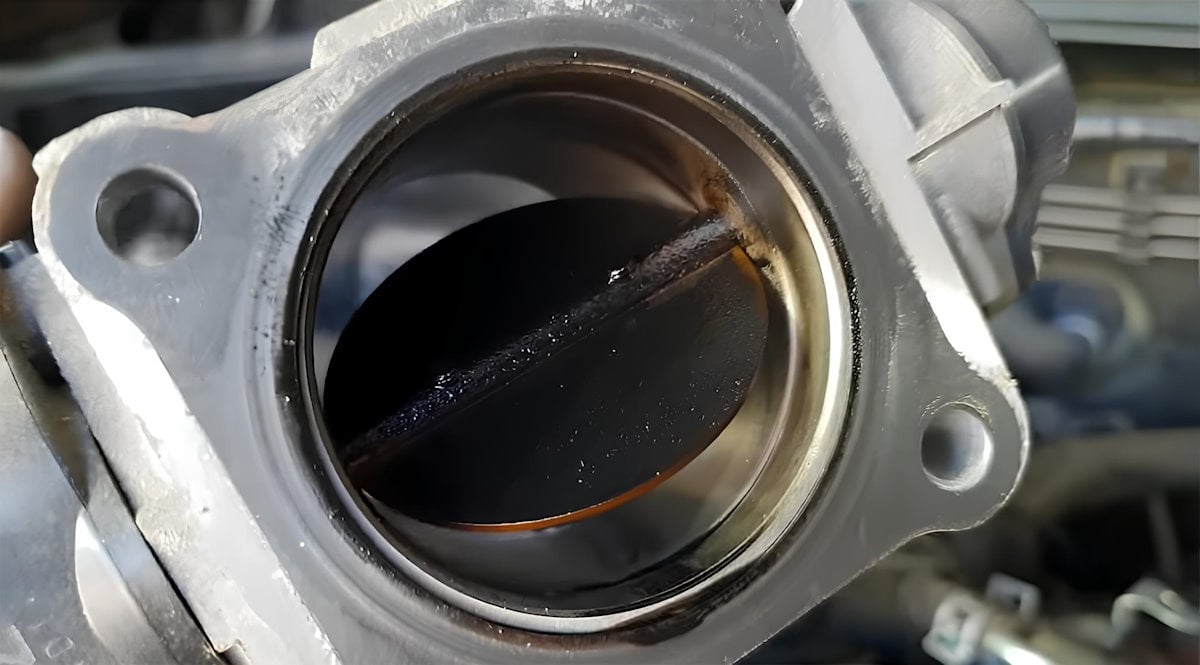
The most common cause is soot and carbon buildup, but there may be several other reasons. Typical causes include:
- Carbon deposits and soot accumulation. Deposits of soot and oil restrict the movement of the valve disc and the valve stem. As a result, the EGR valve can no longer return freely to its original position and may remain partially open.
- Seizure of the return mechanism. Due to wear, corrosion or contamination, friction increases in the moving parts of the mechanism and the valve stem begins to stick. As a result, the valve may become stuck in the open position or operate irregularly.
- Damage or weakening of the return spring. In some valve designs a return spring is used. If it becomes weakened, stretched or cracked, the valve may not return to the closed position after the control signal stops.
- Failure of the electric drive or actuator. The electric motor or the drive gear may operate intermittently, seize, or fail to provide precise valve movement.
- Fault in the valve position sensor. The sensor may transmit incorrect data, for example indicating that the valve is closed when it actually remains open. As a result, the engine control unit receives incorrect feedback and may incorrectly regulate the valve position or store an error code.
- Incorrect control from the ECU. Problems in the wiring, connectors or power supply system may cause the valve to receive incorrect control signals and remain open even in operating conditions when it should be closed.
In each of these cases, the valve fails to return to the closed position even though the control unit expects it to do so.
In vehicles used mainly in urban driving conditions, the problem develops faster. Low operating temperatures and short trips promote the buildup of a sticky mixture of soot and oil, which effectively restricts the movement of the valve mechanism.
What Are the Risks of Driving with the EGR Valve Stuck Open in the Long Term
Driving with an EGR valve stuck in the open position is technically possible, but it is strongly not recommended. Over time, it can lead to more serious mechanical and operational issues.
Long-term operation of a vehicle with a permanently open EGR valve may lead to:
- disruption of the air-fuel mixture stability and local overheating of certain engine components;
- reduced efficiency of the turbocharger and contamination of boost system components;
- accelerated contamination of the intake manifold;
- problems with the diesel particulate filter (DPF) or catalytic converter;
- faster carbon buildup in the cylinders and increased wear of the piston rings.
An unstable exhaust gas composition may also disturb the operation of the oxygen sensors (lambda sensors) and lead to secondary engine control unit error codes. The longer the issue is ignored, the higher the risk of costly repairs.
Diagnosis: How to Confirm That the EGR Valve Is Stuck Open
Effective diagnosis should be based on actual data rather than assumptions.
Checking with a Diagnostic Scanner
The valve position commanded by the ECU should be compared with its actual position. If there is a significant difference between the commanded and the actual position, this may indicate a problem with the valve mechanism or its control system.
It is also worth monitoring the airflow readings from the MAF sensor. If the EGR valve is commanded to close but the measured intake air mass is lower than expected, this may indicate that the valve remains partially open despite the closing command.
OBD Fault Code Analysis
Fault codes related to EGR flow or valve position may appear. Typical codes include:
- P0401 – insufficient EGR flow;
- P0402 – excessive EGR flow;
- P0404 – EGR circuit malfunction.
It is important to remember that code P0401 does not always mean that the valve is mechanically stuck. The cause may also be restricted flow in the intake manifold or a fault in the differential pressure sensor.
On the other hand, P0402 more often occurs when the EGR valve is stuck open, allowing excessive exhaust gases to enter the intake system.
A fault code alone does not always confirm that the valve itself is faulty. Current operating parameters, fuel trim values and the conditions under which the error appears should also be taken into account.
Checking the Actuator (Vacuum or Electric)
Depending on the design, the actuator operation should be checked along with vacuum integrity, control signals and power supply.
Removal and Mechanical Inspection
Removing the valve allows the condition of the component to be evaluated, including the level of contamination, freedom of movement and possible mechanical seizure. At this stage it is also advisable to inspect the intake channels, as heavy deposits often affect the entire intake system, not only the valve itself.
If the intake manifold is heavily contaminated, cleaning the valve alone may provide only a temporary improvement, because restricted airflow will continue to destabilise engine operation.
What to Do If the EGR Valve Is Stuck Open
If there is a suspicion that the EGR valve stuck in the open position is destabilising engine operation, it is recommended to carry out a full diagnostic check and perform service intervention as soon as possible, before the fault leads to additional and more costly problems.
The repair method depends on the cause.
Cleaning May Be Sufficient When:
- the problem is mainly caused by carbon deposits;
- the mechanism regains smooth movement after cleaning;
- the actuator and the valve position sensor operate correctly.
Professional carbon removal can often restore the valve’s full functionality. Cleaning should also include the intake passages and, if the design allows, the EGR cooler. Ignoring these components increases the risk of the problem returning quickly.
Replacement May Be Necessary When:
- the actuator is damaged;
- permanent mechanical seizure has occurred;
- the position sensor provides incorrect readings or the valve has mechanical damage.
After replacing the valve, many modern vehicles require adaptation or calibration in the ECU. Without this calibration, the control unit may continue operating with outdated parameters, which can cause fault codes to reappear even though the component itself is functioning properly.
Delaying repairs increases the risk of problems with the turbocharger, intake system and DPF, where repair costs can become significantly higher.
How to Prevent the EGR Valve from Getting Stuck Again
- avoid driving only short distances;
- use high-quality fuel;
- periodically operate the engine under higher load conditions;
- regularly check the condition of the intake system and turbocharger.
Preventive maintenance is always cheaper than repair. In practice, the driving style has a major influence on how quickly carbon deposits accumulate.
Summary
A permanently open EGR valve primarily leads to unstable engine operation at idle, loss of power, and reduced vehicle performance. Prolonged driving in this condition may negatively affect the turbocharger and accelerate contamination of the intake system.
Diagnosis should include analysing the current engine operating parameters, the EGR valve position, and stored fault codes. In many cases, cleaning the valve is sufficient, but if mechanical damage is present, replacement may be necessary.
Addressing the issue promptly helps avoid costly repairs and maintain stable engine operation.
Select the right EGR valve for your vehicle in the catalogue.
Go to the EGR valve catalogueFrequently Asked Questions (FAQ)
What does it mean when the EGR valve is stuck open?
It means that exhaust gases constantly enter the intake system, which disrupts the fuel combustion process and causes unstable engine operation.
What are the symptoms of a faulty EGR valve?
Rough idling, loss of power, jerking when starting to move, and the Check Engine light turning on.
Can you drive with a stuck EGR valve?
Yes, but it is not recommended. Prolonged driving may lead to contamination of the intake system and problems with the turbocharger and exhaust system.
Why does the EGR valve get stuck?
Most often due to carbon deposits and soot that prevent the valve mechanism from working properly.
What should you do if the EGR valve is stuck?
A diagnostic check is required. In some cases cleaning helps, while in others the valve needs to be replaced.