

Clogged EGR Valve – Symptoms in a Diesel Engine
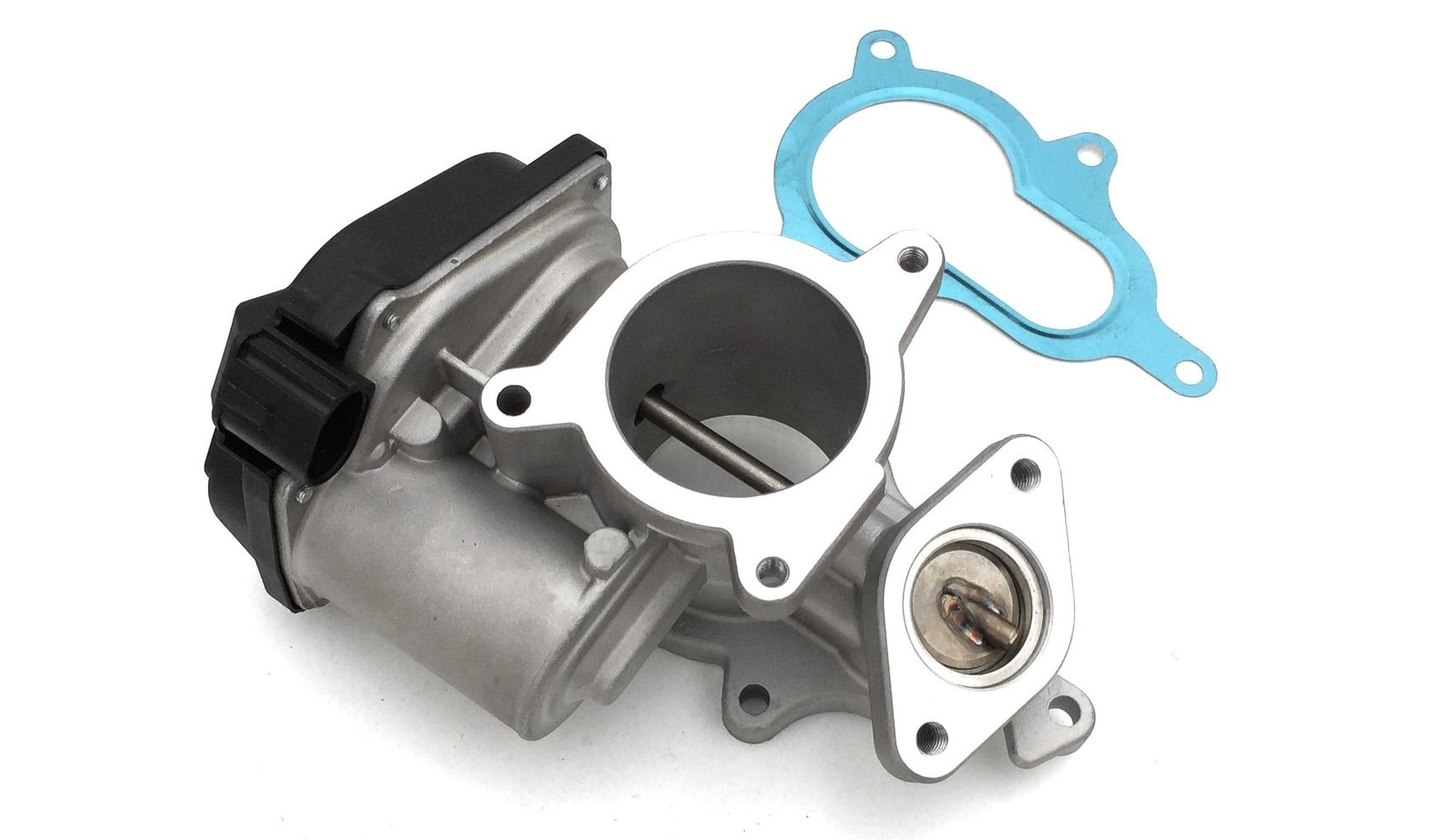
Table of Contents
EGR Valve – What It Is and What Function It Serves in a Car
What Is EGR in a Car? The abbreviation EGR stands for Exhaust Gas Recirculation, which is an exhaust gas recirculation system. Every petrol and diesel engine produces exhaust gases containing harmful chemical compounds during operation. Nitrogen oxides (NOx), formed during combustion at high temperatures and pressures, are among the most harmful pollutants. To reduce NOx emissions, an EGR valve is used.
What Is the Role of the EGR System? The main task of this component is to redirect a portion of the exhaust gases back into the intake manifold, where they are burned again. As a result, the combustion temperature is reduced and the emission of harmful gases decreases.
How Does the EGR Valve Work?
- Valve opening – occurs at low engine load, for example at idle.
- Recirculation – part of the exhaust gases is routed back to the intake manifold.
- Mixing with air – mixing exhaust gases with fresh air lowers the combustion temperature, which reduces the amount of nitrogen oxides produced.
- Valve closing – under higher engine load, the EGR valve closes, allowing the engine to operate at full power.
When the EGR system operates correctly, nitrogen oxide (NOx) emissions can be reduced by up to 50%, which has a significant positive impact on environmental protection.
What Is an EGR Valve in a Petrol Engine? Although it operates on a similar principle, its design differs from the version used in diesel engines. EGR valves in petrol engines have a much smaller flow cross-section, as the volume of exhaust gases passing through them is significantly lower.
In diesel engines, the EGR valve can open up to 100%, allowing large amounts of exhaust gases to pass through. In petrol engines, however, the valve operates gradually and typically redirects no more than around 10% of exhaust gases into the intake manifold. For this reason, a larger valve cross-section is not required in petrol applications.
In the following sections of the article, we will explain what the EGR system is responsible for, why it can fail, what the symptoms of a faulty EGR valve are, and how to prevent it from becoming clogged.
Why Does the EGR Valve Get Clogged Mainly in Diesel Engines?
Before discussing the symptoms of a clogged EGR valve in a diesel engine, it is important to understand why this issue occurs so frequently in diesel units.
The main reasons include:
- High soot content. The combustion characteristics of diesel fuel lead to the formation of a large amount of fine particulate matter. These particles accumulate inside the EGR valve and gradually restrict its flow.
- Incomplete fuel combustion. When a diesel engine operates at idle or under low load, the fuel may not burn completely. This increases the amount of carbon deposits and soot inside the EGR system.
- Fuel quality. The lower the quality of the diesel fuel, the more contaminants enter the exhaust system and the EGR valve.
- Design of the exhaust gas recirculation system. In diesel engines, the EGR valve is installed directly in the exhaust gas flow. This means constant exposure to high temperatures and aggressive chemical compounds, which accelerates the clogging process.
It is also worth noting that the symptoms may be more pronounced if other issues are present in the system, such as a faulty turbocharger, a clogged DPF filter, or poor-quality fuel. Typical symptoms of a clogged EGR valve often occur in vehicles driven mainly in urban conditions and over short distances. In such driving modes, the engine does not reach full operating load, which promotes the accumulation of soot and contaminants.
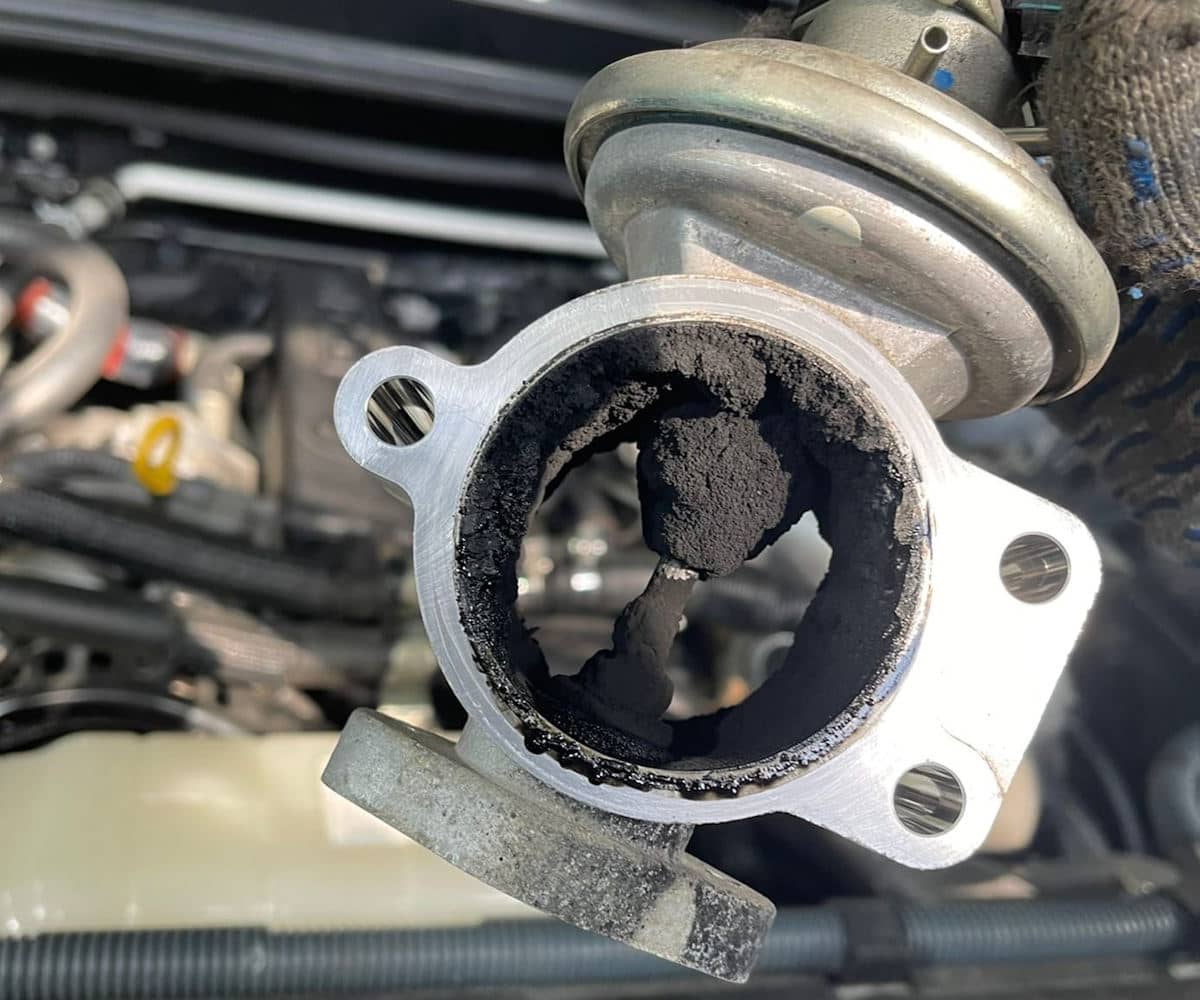
Main Symptoms of a Clogged EGR Valve in a Diesel Engine
A clogged EGR valve in a diesel engine can cause a variety of symptoms, most commonly reduced performance and increased fuel consumption. Knowing the typical signs of a clogged EGR valve allows you to react in time and avoid more serious failures. Below are the most common symptoms indicating that the EGR valve is contaminated or faulty.
Loss of Power and Jerking During Acceleration
Fuel does not burn completely, which reduces the overall efficiency of the power unit. The vehicle accelerates very slowly, especially at low engine speeds, and sudden throttle input may result in momentary power drops. These symptoms of a faulty EGR valve are particularly noticeable during city driving or when overtaking.
Increased Fuel Consumption
Improper operation of the exhaust gas recirculation system can lead to higher fuel consumption. An imbalance in the air–fuel mixture causes the engine to compensate for the lack of air by injecting more diesel fuel. As a result, the mixture becomes excessively rich, which directly increases fuel consumption.
Engine Jerking and Unstable Operation
Incorrect operation of the exhaust gas recirculation system may cause symptoms of a faulty EGR valve such as uneven idling and noticeable engine jerking. Disturbances in the air–fuel mixture lead to unstable combustion, causing the engine to run irregularly, especially at low engine speeds or during gentle acceleration.
Black Smoke from the Exhaust
When the EGR valve fails, black smoke may appear from the exhaust pipe. This is a typical sign of incomplete diesel fuel combustion and insufficient air supply in the mixture. Symptoms of a clogged EGR valve also include an excessively rich air–fuel mixture, which results in increased soot emissions. Heavy smoke is particularly noticeable during sudden acceleration.
Check Engine Warning Light
The illumination of the Check Engine warning light on the dashboard can indicate various faults, including problems with the exhaust gas recirculation system. A faulty EGR valve often triggers this warning light in combination with other symptoms, such as increased fuel consumption or reduced engine power.
Delayed Throttle Response
If the EGR system does not operate correctly, symptoms may include a delayed engine response to throttle input. The vehicle reacts with a noticeable lag, which makes smooth driving more difficult, especially when quick acceleration is required.
Why You Should Not Ignore EGR Valve Problems
When the EGR valve is clogged, diesel engine symptoms may intensify over time and begin to affect other components of the intake and exhaust systems. Some symptoms can indicate multiple issues at once and may sometimes be incorrectly attributed to other components.
Ignoring EGR valve faults can lead to problems such as:
- Increased load on the turbocharger, which can shorten its service life or cause overheating.
- Contamination of the intake manifold, restricting airflow.
- Faster clogging of the DPF filter due to an excessively rich air–fuel mixture.
- Increased exhaust emissions and the risk of failing a technical inspection.
If the exhaust gas recirculation system is not stabilised in time, it may result in very costly repairs.
Prevention – How to Avoid Repeated EGR Valve Clogging
First of all, it is worth considering how to prevent similar problems in the future. There are several measures that help keep the system in good condition and reduce the risk of the EGR valve becoming clogged again:
- Use high-quality fuel only
The fewer impurities and additives in diesel fuel, the better the combustion process. This reduces soot formation and limits deposits in the EGR system. - Avoid short trips with a cold engine
Under such conditions, combustion is incomplete, which accelerates contamination of the EGR valve and related components. - Drive on a motorway from time to time and maintain higher engine speeds
This type of driving helps burn off accumulated soot and partially clean the EGR valve. - Monitor the condition of the engine oil, turbocharger and intake manifold
Regular diagnostics and timely replacement of worn components help maintain proper operation of the entire exhaust and intake system. - Use fuel additives if approved by the vehicle manufacturer
Such products improve combustion quality and reduce soot formation.
By following these simple rules, you can significantly reduce the risk of EGR valve blockage and avoid costly repairs related to the exhaust gas recirculation system.
Summary
Vehicle owners who understand what the EGR system is responsible for and what an EGR valve is are well aware of the importance of this system and its critical components, especially the EGR valve itself. A malfunction in the exhaust gas recirculation system can lead to numerous negative consequences, including damage to the turbocharger and other components, the repair or replacement of which can be very expensive.
To avoid costly repairs, symptoms of a clogged EGR valve should never be ignored. The earlier diagnostics are carried out, the lower the repair costs will be. It is also important to remember preventive measures that extend the service life of the EGR valve and the entire recirculation system.
If you need a new EGR valve, you can find it in the appropriate category of our online catalogue. We offer over 1,400 original parts and more than 5,400 certified aftermarket replacements from trusted manufacturers.
Frequently Asked Questions About the EGR Valve
Can you drive with a clogged EGR valve?
Technically, it is possible, but not recommended. A clogged EGR valve disrupts the air-fuel mixture, reduces engine power, and increases fuel consumption. Prolonged driving in this condition can lead to accelerated wear of the turbocharger, contamination of the intake manifold, and problems with the DPF.
Is it better to clean or replace the EGR valve?
If the EGR valve is only contaminated and mechanically sound, professional cleaning is usually sufficient. However, if the valve is stuck, the actuator is worn, or the housing is damaged, cleaning will not be effective and the EGR valve should be replaced.
How often should the EGR valve be cleaned in a diesel engine?
There is no fixed service interval, but preventive cleaning is generally recommended every 60,000–100,000 km. Vehicles used mainly for short trips or running on low-quality fuel may experience EGR clogging much sooner.
Does a faulty EGR valve affect the turbocharger?
Yes. Incorrect operation of the EGR system increases the load on the turbocharger and can cause overheating. Over time, this reduces the turbocharger’s service life and increases the risk of costly repairs.