

Brake Fluid Leak: Symptoms, Causes, and Solutions
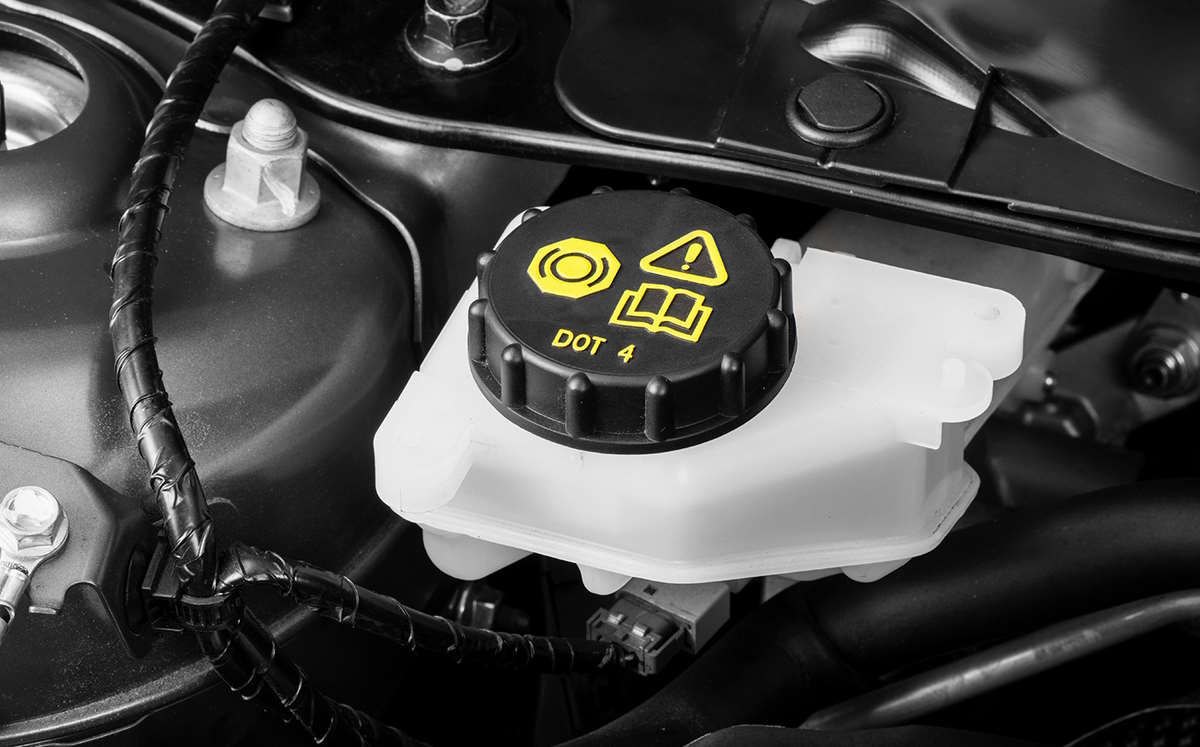
Table of Contents
- What Is Brake Fluid Used For?
- Signs of a Brake Fluid Leak
- Why Does a Brake Fluid Leak Occur?
- How to Locate a Brake Fluid Leak: Diagnostic Methods
- Why Is a Brake Fluid Leak Dangerous?
- Brake Fluid Leak — How to Fix the Problem?
- Topping Up Brake Fluid — Why It's Worth Keeping a Spare in the Boot
- Preventing Brake Fluid Leaks
- Summary
What Is Brake Fluid Used For?
Brake fluid acts as a hydraulic medium that transfers the force generated by pressing the brake pedal to the other components of the braking system.
How the Braking System Works
- The driver presses the brake pedal.
- The force is transmitted to the brake fluid.
- The generated hydraulic pressure is delivered to the brake pads.
- The pads clamp onto the brake disc.
- The vehicle slows down or comes to a complete stop.
For brake fluid to perform its function correctly, it must have low compressibility (to ensure fast and precise force transmission), a high boiling point (due to intense friction during braking), and a low freezing point (to guarantee reliable operation in winter conditions).
In addition, brake fluid has a lubricating function. It protects system components such as cylinders, pistons, and seals from corrosion and premature wear. A brake fluid leak is a serious malfunction that can lead to dangerous consequences — from increased stopping distance to complete loss of vehicle control and an accident.
In the following sections, we will explain why brake fluid leaks occur, which symptoms indicate a problem, and what should be done to prevent this type of failure.
Signs of a Brake Fluid Leak
When a brake fluid leak occurs, the symptoms are usually quite noticeable — especially if the vehicle’s technical condition is checked regularly. The most common signs of a brake fluid leak include:
- Drop in fluid level. If you find yourself topping up brake fluid more frequently, even though your driving style and operating conditions have not changed, this may indicate a leak. Such fluid loss most often points to a loss of system tightness.
- Changes in brake pedal behavior. In the event of a leak, the brake pedal may sink almost to the floor with minimal resistance. Its travel may also change — the pedal can feel excessively soft or, in some cases, unusually hard.
- Reduced braking efficiency. Even a minor brake fluid leak negatively affects braking performance. The vehicle requires more time to stop, and the response to pressing the brake pedal becomes delayed.
- Visible signs of leakage. Fluid spots under the vehicle near the wheels, as well as damp areas on brake hoses, calipers, or cylinders, clearly indicate a possible brake fluid leak.
- Unusual noises. Whistling, squealing, or grinding noises during braking may be a sign that there is insufficient brake fluid in the system.
- Vehicle pulling to one side. If the vehicle pulls to one side while braking, this may indicate uneven brake operation, often caused by fluid loss and unequal pressure in the brake circuits.
All of these signs require immediate attention — your safety and the safety of other road users directly depend on it.
Why Does a Brake Fluid Leak Occur?
Brake fluid leaks can be caused by both worn brake system components and mistakes made during servicing. Below are the seven most common reasons:
- Wear of flexible brake hoses. Over time, rubber brake hoses lose elasticity, develop cracks, deform, and deteriorate. As a result, brake fluid can start to leak.
- Damage to brake cylinders. Both the master brake cylinder and the wheel cylinders can suffer from corrosion or mechanical damage, leading to a loss of sealing.
- Defects in metal brake lines. Metal brake pipes are also susceptible to corrosion. Leaks often occur at connection points or bends.
- Leaking bleed screws. If a brake bleed screw is incorrectly installed, insufficiently tightened, or damaged, it may cause brake fluid leakage.
- Errors during servicing. Incorrect installation or poor-quality servicing of brake system components often leads to loss of system tightness.
- Worn seals. Leaks most commonly occur at the connection between the master brake cylinder and the brake booster. Worn sealing elements are one of the most frequent causes of fluid loss.
- Damage to the reservoir. Cracks in the brake fluid reservoir housing or cap can cause not only leakage but also accelerated evaporation of the brake fluid.
These are the most typical scenarios that any driver may face, regardless of experience, vehicle brand, or model. The key is to stay calm, detect the brake fluid leak in time, identify the source, and eliminate the problem.
How to Locate a Brake Fluid Leak: Diagnostic Methods
If brake fluid is being lost, the first step is to accurately identify the point of leakage. There are three main diagnostic methods that any driver can use:
- Visual inspection. Start by checking the brake fluid level in the reservoir and inspecting the reservoir itself. Then examine the flexible hoses, metal brake lines, calipers, brake cylinders, and other brake system components for signs of leakage or compromised seals. It is also advisable to inspect the inner surface of the brake discs and the area around the wheels, as leaks often appear there first.
- Vehicle behavior during braking. During gentle braking, pay close attention to the brake pedal feel. If the pedal becomes unusually soft, has excessive travel, or braking efficiency noticeably decreases, this may indicate a problem within the braking system.
- Building pressure in the system. Press the brake pedal several times to build hydraulic pressure, then carefully inspect all connections and seals for brake fluid leaks. Even a minor loss of tightness can eventually lead to a serious malfunction.
If you detect any signs of a brake fluid leak, stop driving immediately and contact a service center as soon as possible. Operating a vehicle with this type of fault is extremely dangerous.
Why Is a Brake Fluid Leak Dangerous?
The consequences of brake fluid loss primarily include an increased stopping distance, brake system failure, and loss of vehicle control, which may result in a road traffic accident.
A brake fluid leak is an extremely serious malfunction that requires immediate action. Timely response affects not only the technical condition of the vehicle but also your health and, in some cases, your life. At the first signs of a brake fluid leak, appropriate measures must be taken as soon as possible — either independently or with the help of qualified service technicians.
Brake Fluid Leak — How to Fix the Problem?
If you have confirmed that a brake fluid leak is present, the first step is to precisely locate the source of the problem. In most cases, repairing this type of fault involves replacing brake hoses, seals, or the master brake cylinder.
Below are the basic steps using a damaged brake hose as an example:
- Removal of the old hose.
Remove the damaged brake hose and, when installing a new one, be sure to replace all sealing elements. - Brake fluid replacement.
It is recommended to use the same type of brake fluid as before, or a product with the closest possible chemical composition and specifications. - Bleeding the braking system.
This procedure removes air from the system and restores proper braking performance. It is crucial to strictly follow the bleeding sequence recommended by the vehicle manufacturer, as the procedure may vary depending on the model. - Operational check.
After completing all work, thoroughly test the braking system to ensure it is fully functional and safe.
Minor repairs, such as replacing a brake hose or seals, can be carried out independently. However, if you are not confident in your skills, it is better to entrust the vehicle to professionals.
Topping Up Brake Fluid — Why It's Worth Keeping a Spare in the Boot
It is recommended to always carry a small reserve of brake fluid in the boot — in an emergency situation, this can be extremely useful. In the event of a sudden brake system fault, having brake fluid on hand allows you to quickly restore the fluid level in the reservoir and safely reach the nearest service center.
At the workshop, specialists will carry out a full diagnosis, identify the source of the leak, and eliminate the fault.
However, it is important to remember that topping up brake fluid in the presence of a leak is only a temporary measure and does not address the underlying cause of the problem.
Select the right brake fluid for your vehicle in the catalogue.
Go to the brake fluid cataloguePreventing Brake Fluid Leaks
Preventive recommendations:
- Regularly inspect the condition of brake hoses, metal brake lines, and cylinders for signs of moisture or brake fluid seepage. Also monitor the brake fluid level in the reservoir.
- Replace brake fluid every 2–3 years or every 40,000 kilometers. Under intensive vehicle use or if signs of fluid degradation appear (color change, sediment), replacement should be carried out more frequently.
- Drive smoothly and avoid excessive loads on the braking system.
- Use only high-quality spare parts and consumables during repairs and maintenance.
- Have the braking system professionally inspected at least once a year.
- Respond even to minor signs of leakage or reduced braking efficiency — consult specialists without delay.
Following these simple guidelines will help keep the braking system in good working condition and ensure safety for you and other road users.
Summary
A brake fluid leak is a serious and potentially dangerous fault that can be resolved relatively quickly if detected at an early stage and if the first symptoms are not ignored. Regular preventive maintenance and timely visits to a qualified service center help avoid severe consequences and ensure road safety — for you, your passengers, and others around you.
FAQ — Frequently Asked Questions About Brake Fluid Leaks
Is it safe to drive with a brake fluid leak?
No. Driving a vehicle with a brake fluid leak is extremely dangerous. Even a small loss of brake fluid can reduce braking efficiency, increase stopping distance, and lead to complete brake failure. If a leak is detected, you should stop driving immediately and fix the problem.
What should I do if the brake fluid level suddenly drops?
First, check for visible leaks and try to identify the source of the problem. You may temporarily top up the brake fluid to reach a service center, but this is only a short-term solution. A full diagnosis and repair of the braking system is mandatory.
Why can a brake fluid leak occur suddenly?
Most often, sudden leaks are caused by worn brake hoses, damaged seals, or corrosion of metal brake lines. In some cases, the issue appears after improper brake system maintenance or due to cracks in the brake fluid reservoir.
Can a brake fluid leak be fixed on your own?
Minor repairs, such as replacing a brake hose or seals, can be done independently if you have the necessary experience. However, the brake system must be properly bled afterward. If you are not confident in your skills, it is safer to have the repair done by professionals.
How can a brake fluid leak be prevented?
Regularly check the brake fluid level and inspect hoses, lines, and cylinders for signs of leakage. Replace brake fluid every 2–3 years and use only high-quality parts and fluids. Preventive maintenance significantly reduces the risk of brake fluid leaks.