

Main Types of Automotive Lighting
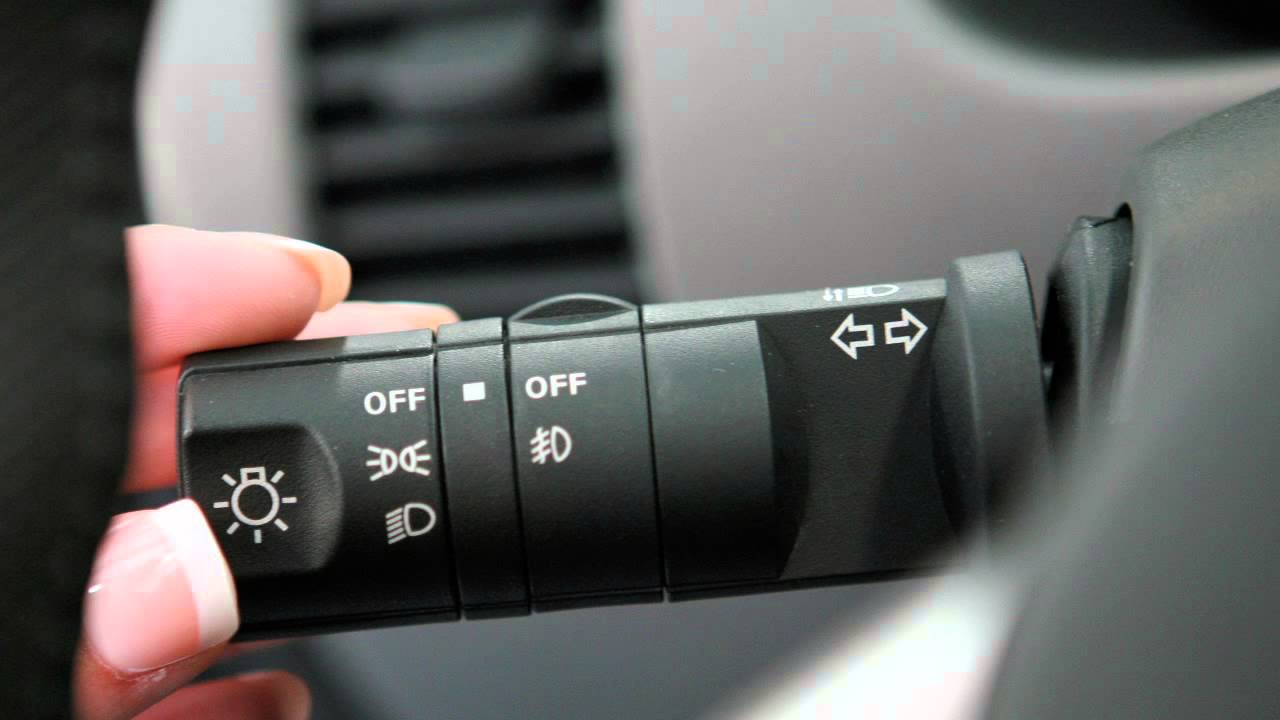
Table of Contents
Types of Automotive Lighting
Automotive lighting devices are essential equipment that not only ensures comfortable driving at night but also enhances safety during poor visibility conditions, such as fog, rain, or snow. They increase the vehicle's visibility on the road and alert other road users to maneuvers or emergency situations.
What lighting devices and external lighting systems are found in a car:
- Low-beam and high-beam headlights.
- Daytime running lights (DRLs).
- Fog lights.
- Turn signals.
- Hazard lights.
- Position lights.
- Parking lights of various types.
- Reflectors (retroreflectors, catadioptric reflectors).
- Brake lights and reverse lights.
- License plate illumination.
Let’s take a closer look at the types of lighting devices in a car, their names, descriptions, and the situations where and when they should be used.
Low-Beam Headlights
According to Polish traffic regulations, low-beam headlights must be used at all times during vehicle operation, regardless of weather conditions or visibility, not just at dusk or nighttime. In practice, they serve as a safety feature, enhancing the vehicle's visibility on the road. The rules for using low-beam headlights are detailed in the first clause of Article 51 of the Polish Traffic Code.
The low-beam symbol is standardized across all vehicles. It is depicted as a stylized reflector with rays directed diagonally toward the ground.

Depending on the car model, the controls for low-beam headlights are typically located on the dashboard (usually on the left side) as a switch or on a stalk near the steering wheel.
Daytime Running Lights (DRLs)
Daytime running lights (DRLs) are auxiliary lighting devices installed on the car's bumper or integrated into the lower section of the headlight assembly, beneath the main lamps.
DRLs serve as an alternative to low-beam headlights for daytime driving. The bright light emitted by LED strips enhances the vehicle's visibility, even on sunny days with high ambient brightness.
According to Article 51 of the Polish Road Traffic Code, a moving vehicle must have either DRLs or low-beam headlights switched on during the day. The choice between these two lighting options is left to the driver's discretion. However, it is important to note that both lighting sources must not be activated simultaneously.
Since 2011, all passenger cars sold in the EU are required to be equipped with DRLs. If a vehicle lacks this lighting system as part of its standard equipment, the owner can install it independently. In doing so, the installation must comply with applicable regulations: DRLs must be placed at a minimum distance of 600 mm from each
other, with a mounting height between 250 mm and 1500 mm.
The DRL indicator is depicted as stylized beams of light pointing upward. In most modern cars, DRLs activate automatically when the engine is started. In some cases, they can be enabled via onboard computer settings, the multimedia system, or manually using a switch.

High-Beam Headlights
High-beam headlights are the most powerful lighting devices in a car. They illuminate the road surface over long distances (100 meters or more) and are primarily used at night on rural roads and highways where street lighting is absent.
High beams are controlled using a dedicated switch, typically located on or beneath the steering wheel.
The symbol for high-beam headlights is standardized across all vehicles: it depicts a reflector with horizontal beams. When activated, this symbol lights up in blue on the instrument panel.

When Should You Switch from High Beams to Low Beams?
When is a driver required to switch from high beams to low beams? High beams are primarily used on unlit roads, especially on intercity routes, but they can also be employed in urban settings when visibility is poor, and street lighting is insufficient. Drivers alternate between high and low beams based on the road situation to ensure optimal visibility without causing inconvenience to others.
In most countries, using high beams is prohibited when there are oncoming vehicles to prevent blinding other drivers. In Poland, while there is no formal prohibition, an unwritten rule applies: if an oncoming driver switches from high beams to low beams, you should reciprocate as a courtesy.
Fines for Improper Lighting Use in 2024: How Many Penalty Points Can You Receive?
The table below outlines common violations related to faulty vehicle lighting systems or improper use of different light sources. It specifies financial penalties (in PLN) and the penalty points associated with these violations.
Violation | Fine (in PLN) | Penalty Points |
Driving without lights at night | 300 | 6 |
Low beams or daytime running lights (DRLs) not turned on while driving during the day | 100 | 2 |
Improper use of high beams | 200 | 4 |
Driving without lights in a tunnel at any time of day | 200 | 6 |
Violation of rules for using front fog lights | 100 | 2 |
Driver failed to turn on lights in conditions of reduced visibility | 200 | 2 |
There are also other fines related to malfunctioning automotive lighting equipment or violations of the rules for its use.
Additionally, Polish police regularly conduct campaigns such as "Your Headlights – Your Safety", aimed at educating drivers on the importance of maintaining their lighting systems in proper working condition and using them correctly according to visibility conditions and other road situations.
Turn Signals
Turn signals are auxiliary amber-colored lights integrated into the front and rear lamps of a vehicle. Additional indicators may also be positioned on the sides of the vehicle’s body for improved visibility.
These lights are activated during specific driving maneuvers, such as starting to drive, changing lanes, overtaking, turning, making U-turns, or entering a roundabout.
In most vehicles, the turn signal control lever is located to the left of the steering column. Moving the lever downward activates the left turn signal, while moving it upward activates the right one.
The symbol for turn signals is universally recognized: two short, thick arrows pointing in opposite directions.

Hazard Lights
Hazard warning lights are a safety feature designed to signal an emergency situation. They are typically activated during an emergency stop caused by a breakdown, an extraordinary event, or when a stop is requested by the police.
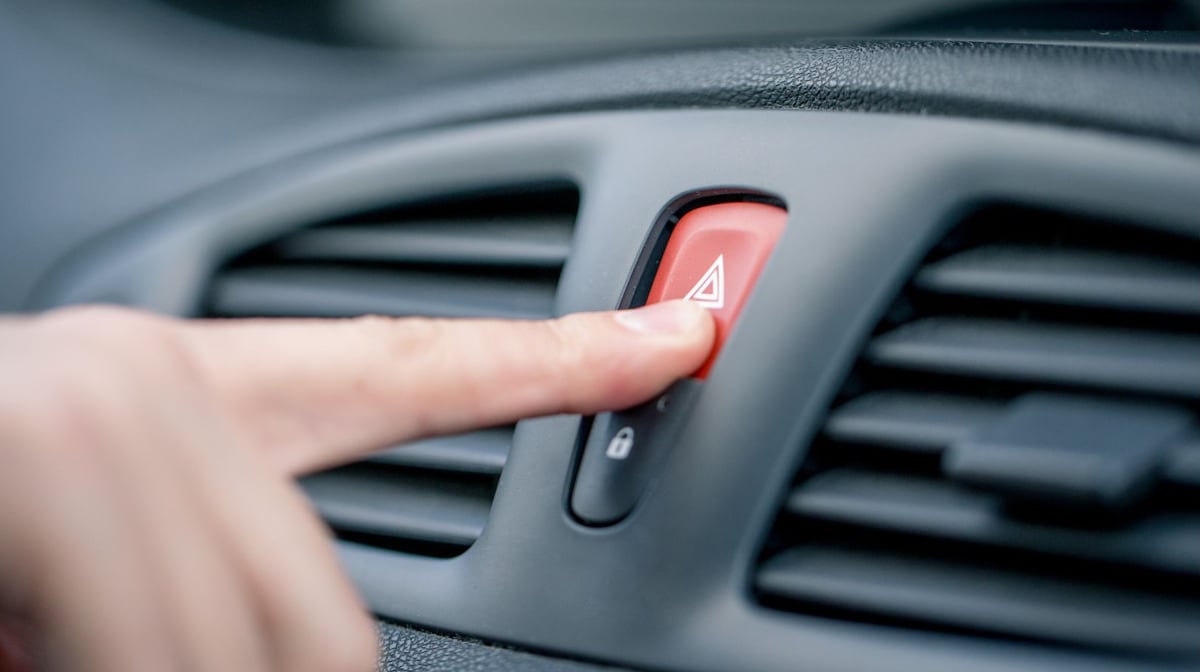
The hazard light switch is marked with a red triangle for easy identification. It is located on the control panel in a clearly visible position, separate from other switches, to allow quick access in urgent situations.
On the dashboard, the hazard light indicator may use the same symbol as the turn signals—two arrows pointing in opposite directions. However, when the hazard lights are activated, this symbol flashes continuously to indicate their use.
Parking Lights
The primary purpose of parking lights is to indicate the location of a parked vehicle at night or in low-visibility conditions. Depending on the technical specifications of the vehicle, this type of lighting may activate automatically alongside the position lights or be turned on using a separate button.

Brake Lights
Brake lights are a critical safety feature, designed to alert drivers behind the vehicle of an intention to stop. They activate automatically when the brake pedal is pressed and deactivate when the pedal is released.
Typically integrated into the vehicle’s rear lamps, brake lights may also be positioned on the rear spoiler or behind the rear window for enhanced visibility. According to current regulations, their brightness must exceed that of the position lights to ensure they stand out clearly.
Reverse Lights
Reverse lights serve as warning signals, informing drivers behind the vehicle of the intention to engage reverse gear. Unlike brake lights, reverse lights emit a white light to avoid misinterpretation of the signal.
Reverse lights activate automatically when the gear selector is shifted into the "R" (reverse) position.
Fog Lights
The primary purpose of fog lights is to enhance safety when driving in adverse weather conditions, such as fog, heavy rain, dust, or sandstorms.
Types of Automotive Fog Lights:
- Front Fog Lights. These do not blind oncoming drivers, enabling slow and safe driving in low-visibility conditions. Their light is white or selectively yellow.
- Rear Fog Lights. These enhance the vehicle’s visibility for drivers behind. Their light is red.
On the dashboard, the indicators for fog lights have different symbols. The symbol for the front fog lights is a reflector with downward-facing beams crossed by a wavy line. The indicator for the rear fog lights is represented by a reflector with horizontally oriented beams, also crossed by a vertical wavy line.


Reflectors
Reflectors, also known as retroreflectors or catadioptric elements, are components of the vehicle's passive lighting system. Unlike active lighting systems, they do not include lamps or LED strips. Instead, they are made of reflective materials that become highly visible in the dark when illuminated by external light sources, such as other vehicles' headlights.
The primary function of reflectors is to indicate the dimensions of the vehicle, ensuring it remains noticeable to other road users, especially in low-light conditions.
Position Lights
Position Lights are used to indicate the dimensions of a vehicle when driving in low-visibility conditions or when parked on the side of the road.
There are front and rear position lights:
- Front Position Lights: These light sources are symmetrically positioned in the lower part of the front headlights, which is why they are sometimes referred to as "accent lights." Their color is exclusively white.
- Rear Position Lights: These are installed at the rear of the vehicle, symmetrically aligned on a single line. Their color is always red. On trucks and buses, rear parking lights are often duplicated on the upper parts of the body.
Depending on the vehicle’s technical specifications, position lights may activate automatically along with the low beams or via a separate button.
On the dashboard, the position lights indicator is represented as two headlights with beams radiating outward.

Marker Lights
Marker lights are designed to visually indicate the side dimensions of a vehicle, especially in poor visibility conditions. They are commonly installed on trucks and trailers, positioned along the lower edges of the body to enhance visibility and safety.
License Plate Illumination
License plate illumination is a mandatory safety feature that ensures the vehicle's license plate remains clearly visible, allowing law enforcement to identify the vehicle and improving its visibility to pedestrians and other drivers in low-light conditions.
According to traffic regulations, license plates must be clearly legible from a distance of at least 20 meters at all times. At night, the rear license plate light must be operational to comply with legal requirements.
Conclusion
Each type of automotive lighting serves a specific purpose that drivers should understand and utilize correctly. Proper use of these systems ensures maximum safety for you and other road users.
Dashboard indicators for headlights provide a clear visual representation of which lighting sources are active, helping drivers stay informed.
Regularly inspect your vehicle's lighting system to ensure all components are functioning correctly. Malfunctioning lights not only compromise safety but may also result in significant fines imposed by law enforcement.
Frequently Asked Questions
What are the main types of automotive lighting?
There are position lights, low beam and high beam headlights, fog lights, daytime running lights, turn signals, and rear lights — each type serves its own purpose for safety and visibility.
When is it worth choosing LED or xenon lamps instead of standard halogen bulbs?
If brightness, energy efficiency, and durability are important — LED or xenon offers better illumination, especially in bad weather or during nighttime highway driving.
How important is proper headlight adjustment?
It is very important — misaligned headlights can blind oncoming drivers or fail to illuminate the road adequately, reducing safety.
Can bulbs and lighting types be replaced independently?
Yes — provided technical requirements and regulations are followed (bulb type, allowed power, correct beam adjustment). It is always wise to ensure compliance with safety standards.